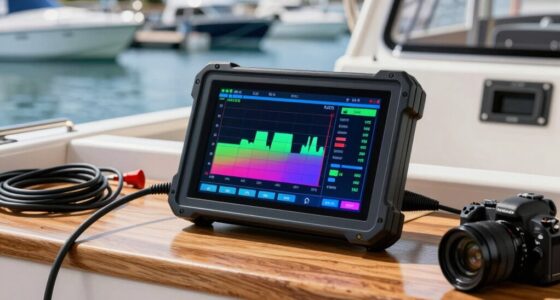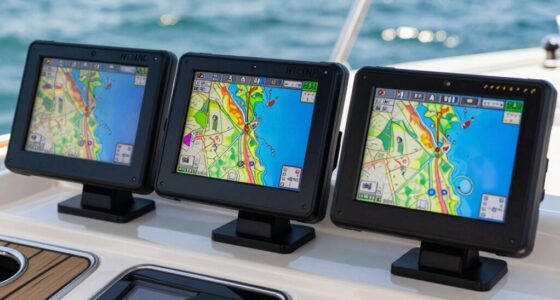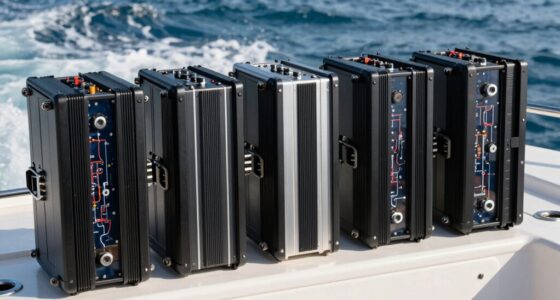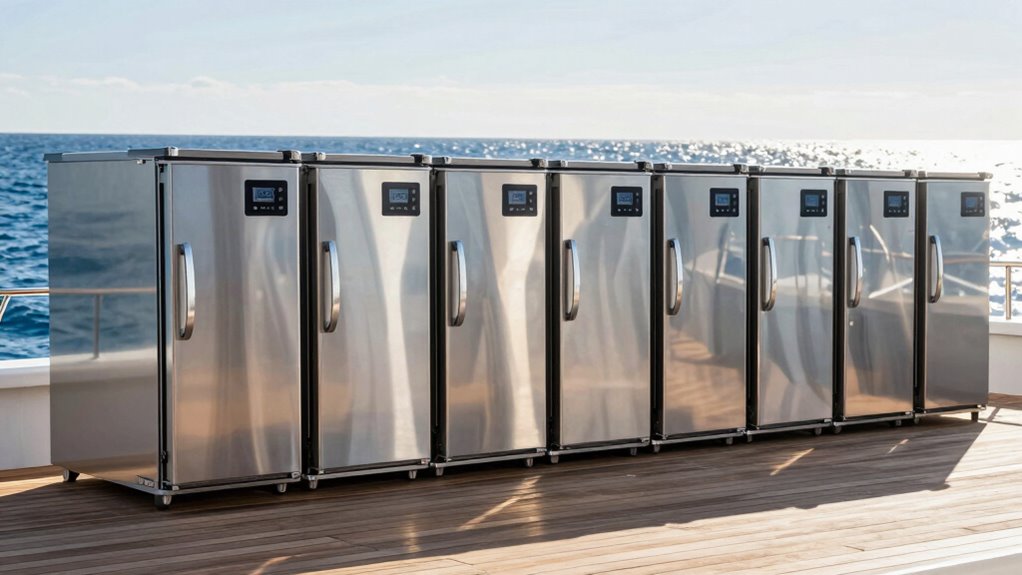

A 12V marine refrigerator needs to match both your boat’s power system and the way you provision for trips. I’d put the Norcold 2.7 cu. ft. compressor refrigerator first for a fixed onboard setup, while the EUHOMY 48QT stands out for portable flexibility and the BODEGACOOLER 3.88 cu. ft. suits buyers wanting a larger built-in-style fridge and freezer. The main tradeoff is between compact portability, installed storage capacity, and the space and battery draw each demands. Power input, ventilation, mounting, and usable interior layout can matter as much as headline capacity on a moving boat. Read on for the full comparison and guidance on matching a refrigerator to your vessel.

Get sports gear delivered free with Prime
- Fast, free delivery on millions of items
- Prime Video, Amazon Music and more included
- Member-only deals all year
Complete the kit



Key Takeaways
- The Norcold 2.7 cu. ft. compressor model is the clearest fixed-install choice: its 12/24V DC design fits an onboard system better than portable coolers, but buyers should check dimensions and ventilation before installation.
- Portable capacity varies widely: the Feelfunn 21QT favors compact storage and easier handling, while the 53QT, EUHOMY 48QT, and Aeitto 52QT offer more room at the cost of taking up more cabin or deck space.
- Dual-zone flexibility has a practical payoff: the Aeitto 52QT can separate cooling and freezing needs, but that feature may be unnecessary for boaters who only need chilled provisions.
- Large installed-style units serve a different buyer: the BODEGACOOLER 3.88 cu. ft. and RecPro 4.4 cu. ft. emphasize onboard storage rather than portability, so fit and installation planning deserve extra attention.
- Power versatility is not the same as marine readiness: several options accept AC and DC power, but buyers still need to verify secure stowage, ventilation, electrical compatibility, and suitability for their vessel.
| 12 Volt Refrigerator, 53QT -4℉ to 68℉ Electric Cooler with Wheels for Car, Black |  | Best for Flexible Two-Zone Storage | Capacity: 53QT (50L) | Temperature range: -4°F to 68°F | Voltage: 12V DC | VIEW ON AMAZON | See Our Full Breakdown |
| 12V/110V Mini Fridge with Lock, Compact Absorption Refrigerator for RV, Camper, Boat, 1.4 Cu.Ft, Black |  | Best for Quiet, Small-Boat Installations | Capacity: 1.4 cu. ft. | Cooling method: Absorption | Power: 110V AC and 12V DC | VIEW ON AMAZON | See Our Full Breakdown |
| EUHOMY 48QT 12 Volt Portable Refrigerator and Freezer for Car |  | Best for Portable Cooling with Multiple Power Options | Capacity: 48QT | Temperature range: -4°F to 68°F | Power: 12/24V DC and 110/240V AC | VIEW ON AMAZON | See Our Full Breakdown |
| BODEGACOOLER 3.88 cu. ft. RV Refrigerator and Freezer |  | Best for Fixed RV-Style Marine Storage | Total capacity: 116.2 quarts (3.88 cu. ft.) | Refrigerator compartment: 97.2 quarts | Freezer compartment: 19 quarts | VIEW ON AMAZON | See Our Full Breakdown |
| Aeitto 12V Car Refrigerator 52QT (50L) Dual Zone Cooler and Freezer |  | Best Feature-Rich Dual-Zone Pick | Capacity: 52QT (50L) | Temperature range: -4°F to 68°F (-20°C to 20°C) | Power options: 12/24V DC and AC/DC adapter | VIEW ON AMAZON | See Our Full Breakdown |
| Feelfunn 12 Volt Portable Refrigerator, 21QT (20L) |  | Best for App-Controlled Compact Cooling | Capacity: 21 qt (20 L) | Voltage: 12V DC; 110–240V AC | Cooling range: -4°F to 68°F | VIEW ON AMAZON | See Our Full Breakdown |
| BODEGACOOLER 83L Portable RV Refrigerator and Freezer with App Control |  | Best for Separate Fridge and Freezer Zones | Capacity: 83 L total | Refrigerator capacity: 74.35 L | Freezer capacity: 8.65 L | VIEW ON AMAZON | See Our Full Breakdown |
| Norcold Inc. 2.7 cu ft 12/24 VDC Compressor Refrigerator |  | Best for Built-In Replacement Fit | Capacity: 2.7 cu ft | Voltage: 12/24V DC | Cooling method: Compressor | VIEW ON AMAZON | See Our Full Breakdown |
| RecPro 4.4 Cu. Ft. 12V RV Refrigerator, Stainless Steel, Frost-Free | 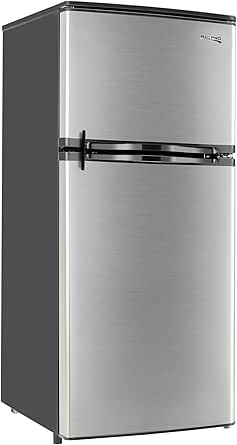 | Best for Larger Built-In Storage | Capacity: 4.4 cu ft | Voltage: 12V | Finish: Stainless steel | VIEW ON AMAZON | See Our Full Breakdown |
| CIGREEN 12V RV Refrigerator with Freezer, 40L, Stainless Steel |  | Best Compact Built-In-Style Refrigerator | Capacity: 40 L | Freezer capacity: 6 L | Temperature range: -12°C to 10°C (10.4°F to 50°F) | VIEW ON AMAZON | See Our Full Breakdown |
| 12v marine refrigerator | Capacity | Temperature range | Cooling method | Voltage |
|---|---|---|---|---|
| 12 Volt Refrigerator | 53QT (50L) | -4°F to 68°F | — | 12V DC |
| 12V/110V Mini Fridge with Lock | 1.4 cu. ft. | — | Absorption | — |
| EUHOMY 48QT 12 Volt Portable R | 48QT | -4°F to 68°F | — | — |
| BODEGACOOLER 3.88 cu. ft. RV R | — | 5°F to 50°F | Compressor | — |
| Aeitto 12V Car Refrigerator 52 | 52QT (50L) | -4°F to 68°F (-20°C to 20°C) | — | — |
| Feelfunn 12 Volt Portable Refr | 21 qt (20 L) | — | — | 12V DC; 110–240V AC |
| BODEGACOOLER 83L Portable RV R | 83 L total | -4°F to 46°F | Compressor | — |
| Norcold Inc. 2.7 cu ft 12/24 V | 2.7 cu ft | — | Compressor | 12/24V DC |
| RecPro 4.4 Cu. Ft. 12V RV Refr | 4.4 cu ft | — | Compressor with variable-speed operation | 12V |
| CIGREEN 12V RV Refrigerator wi | 40 L | -12°C to 10°C (10.4°F to 50°F) | DC compressor | 12V |
More Details on Our Top Picks
12 Volt Refrigerator, 53QT -4℉ to 68℉ Electric Cooler with Wheels for Car, Black
The 53QT capacity and dual-zone layout make this a strong fit for boaters who want chilled provisions and frozen goods in one portable unit. Its -4°F to 68°F range supports both jobs, while battery protection and ECO mode help manage the demands on a vessel’s DC supply. Compared with the EUHOMY 48QT, this model offers a little more listed capacity and adds wheels, but the supplied data does not state an AC power option or a separate household adapter. Its dimensions—25.59 x 21.26 x 17.52 inches—also take up substantial cabin or cockpit space. I’d choose it for a larger boat with a suitable 12V source and room to secure it; buyers seeking a built-in marine galley refrigerator should look at fixed-installation options instead.
Pros:- 53QT capacity with dual zones for keeping refrigerated and frozen items apart
- Battery protection and ECO mode support more controlled use from a vehicle or boat battery
- Wheels and a durable handle make moving the unit easier on shore
- Digital controls, child lock, LED lighting, and frost-free design add day-to-day convenience
Cons:- Large dimensions and weight make it a poor fit for tight cabins or small vehicles
- Listed power is 12V DC, with no AC option specified
- The supplied product details conflict on freezer configuration, so buyers should confirm compartment layout before purchase
Best for: Boaters with room for a large portable unit who want separate chilled and frozen storage on 12V power.
Not ideal for: Owners of small boats or compact vehicles who need a lightweight, space-saving fridge or household AC compatibility.
- Capacity:53QT (50L)
- Temperature range:-4°F to 68°F
- Voltage:12V DC
- Dimensions:25.59 x 21.26 x 17.52 inches
- Zones:Dual zone
- Controls:Digital temperature control
- Additional features:Battery protection, ECO mode, child lock, reversible door, LED lighting, frost-free design
Our verdict“Choose this for roomy boats needing portable dual-zone storage, but verify the compartment layout and available installation space first.”
12V/110V Mini Fridge with Lock, Compact Absorption Refrigerator for RV, Camper, Boat, 1.4 Cu.Ft, Black
This 1.4 cu. ft. absorption fridge prioritizes quiet operation and a compact footprint over capacity or fast cooling. With no fan or vibration listed, it may suit a berth or cabin where compressor noise would be disruptive. Its 12V and 110V compatibility also makes it more flexible between a boat and shore power than the 12V-only BODEGACOOLER 3.88 cu. ft. model. The tradeoff is substantial: this is a small refrigerator, not a dual-zone cooler for provisioning a crew, and the product details do not provide a temperature range or energy-use figure. The lock, reversible door, and adjustable shelves help with secure, flexible placement, but I’d check available ventilation and power arrangements for the intended installation, and never connect both power inputs at once.
Pros:- Absorption cooling is listed as silent, without fan noise or vibration
- Supports both 12V DC and 110V AC power
- Reversible door and adjustable shelves help fit restricted cabin layouts
- Built-in lock can secure stored contents
Cons:- 1.4 cu. ft. capacity is limited for extended trips or multiple people
- No temperature range or energy-efficiency data is supplied
- The 12V and 110V inputs must not be connected at the same time
Best for: Boat owners furnishing a compact cabin or berth who value quiet operation, a door lock, and both DC and AC power options.
Not ideal for: Families or crews needing large food capacity, a dedicated freezer compartment, or published energy-use and temperature figures.
- Capacity:1.4 cu. ft.
- Cooling method:Absorption
- Power:110V AC and 12V DC
- Noise:Listed as no noise
- Color:Black
- Door:Reversible
- Storage and security:Adjustable shelves and built-in lock
Our verdict“Pick this for a small, quiet cabin fridge with AC/DC flexibility, not for crew-sized provisioning or freezer storage.”
EUHOMY 48QT 12 Volt Portable Refrigerator and Freezer for Car
The EUHOMY 48QT is a versatile portable choice for boaters who move between a vessel, vehicle, and shore power. It runs on 12/24V DC as well as 110/240V AC, giving it a broader power range than the 53QT 12 Volt Refrigerator, whose listed supply is 12V DC. The stated rapid-cooling performance—68°F to 32°F in about 15 minutes—can help when loading provisions before departure, while three-level battery protection lets buyers match cut-off settings to their battery setup. Its -4°F lower limit allows freezing, though the supplied data does not describe a separate freezer compartment. At 48QT it holds plenty for a trip, but its listed 45 dB noise level and weight may matter in a compact cabin. I’d favor it for portable use, not a quiet built-in galley.
Pros:- Works with 12/24V DC and 110/240V AC power sources
- Rapid cooling is specified at about 15 minutes from 68°F to 32°F
- Three-level battery protection gives users configurable battery cut-off settings
- 48QT capacity suits longer outings better than compact cabin fridges
Cons:- Portable format still needs an external power source
- 45 dB listed noise may be noticeable in a small sleeping cabin
- The -4°F limit is specified, but a separate freezer compartment is not
Best for: Boaters and campers who want a portable 48QT fridge/freezer that can switch between DC travel power and AC shore power.
Not ideal for: Buyers seeking a silent fixed cabin refrigerator, or anyone who needs a clearly specified separate freezer compartment.
- Capacity:48QT
- Temperature range:-4°F to 68°F
- Power:12/24V DC and 110/240V AC
- Power consumption:45W
- Noise level:45 dB
- Battery protection:Three levels
- Cooling performance:About 68°F to 32°F in 15 minutes
Our verdict“Choose the EUHOMY for portable trips and mixed AC/DC use if you can accommodate its size and compressor noise.”
BODEGACOOLER 3.88 cu. ft. RV Refrigerator and Freezer
Unlike the portable coolers elsewhere in this list, the BODEGACOOLER 3.88 cu. ft. is aimed at a more permanent refrigerator-and-freezer setup. Its 97.2-quart refrigerator and separate 19-quart freezer provide defined storage zones, a practical advantage over the EUHOMY 48QT, which lists a freezing temperature but no separate freezer compartment. The compressor system supports 12V and 24V DC, and three-level battery protection is useful when the unit draws from an onboard battery bank. Inside, the adjustable shelf, crisper drawer, bottle holder, and LED light make it feel more like a galley appliance than a movable cooler. The listed temperature range is 5°F to 50°F, however, so it does not reach the lower temperatures claimed by several portable models. It also needs a suitable DC supply and installation space.
Pros:- Large 97.2-quart refrigerator plus a separate 19-quart freezer
- 12V/24V DC compatibility and three-level battery protection suit onboard power systems
- Adjustable shelf, crisper drawer, bottle holder, and interior LED support organized storage
- 45° anti-tip design is intended for use on bumpy roads
Cons:- Fixed-appliance format is less convenient to move than the EUHOMY or 53QT wheeled coolers
- Listed temperature range starts at 5°F, warmer than the -4°F minimum on several portable alternatives
- Requires compatible DC wiring and sufficient installation space
Best for: Boat or RV owners planning a fixed DC-powered installation who want a large refrigerator section and a separate freezer compartment.
Not ideal for: Day-trippers needing a portable cooler, or buyers who require freezer temperatures below 5°F.
- Total capacity:116.2 quarts (3.88 cu. ft.)
- Refrigerator compartment:97.2 quarts
- Freezer compartment:19 quarts
- Temperature range:5°F to 50°F
- Cooling method:Compressor
- Power compatibility:12V/24V DC
- Noise level:Less than 45 dB
- Interior features:Adjustable shelf, removable crisper drawer, bottle holder, and LED light
Our verdict“Choose this for a roomy, fixed DC galley setup with distinct freezer storage, not for portable use or sub-zero freezing.”
Aeitto 12V Car Refrigerator 52QT (50L) Dual Zone Cooler and Freezer
The Aeitto 52QT combines two independently controlled zones with a broad -4°F to 68°F range, giving boaters flexibility to chill drinks and freeze food without relying on a single shared compartment. Its 12/24V DC support and AC/DC adapter option also make it easier to use at home or on a vehicle than the 12V-only 53QT refrigerator. A removable door, LED lighting, USB port, and utility cutting board add practical touches for mobile meal prep. The listed noise level is under 45 dB, and its 30-degree shockproof design is intended for rough-road travel, though that does not replace secure placement aboard a boat. The tradeoffs are its large footprint, manual defrost, and an outdoor power connector that is not included. I’d choose it over the EUHOMY for dual-zone control and added accessories.
Pros:- Independent dual-zone temperature control supports simultaneous chilling and freezing
- 12/24V DC and AC/DC adapter compatibility provide more power flexibility than 12V-only options
- USB port, LED lighting, removable door, and utility cutting board add useful trip features
- Under-45 dB noise rating and 30-degree shockproof design suit mobile use
Cons:- 52QT size may consume too much floor or cabin space on smaller boats
- Manual defrost requires periodic maintenance
- Outdoor power connector is not included
Best for: Boaters who want independent cooling and freezing zones, multiple power options, and useful accessories for mobile meal prep.
Not ideal for: Owners of small boats who need a compact built-in unit or buyers who want frost-free operation and a supplied outdoor power connector.
- Capacity:52QT (50L)
- Temperature range:-4°F to 68°F (-20°C to 20°C)
- Power options:12/24V DC and AC/DC adapter
- Zones:Dual zone with independent temperature control
- Noise level:Less than 45 dB
- Additional features:Battery protection, energy-saving modes, LED lighting, USB port, removable door, utility cutting board
- Defrost:Manual
Our verdict“Pick the Aeitto for accessory-rich, independently controlled dual-zone storage if your boat has space and you can manage manual defrost.”
Feelfunn 12 Volt Portable Refrigerator, 21QT (20L)
The Feelfunn 21-quart is a portable pick for boaters who want fridge and freezer capability without installing a built-in unit. Its stated 28W ECO-mode draw and three-level battery protection are useful on a smaller onboard power setup, while app control lets you adjust or check settings without reaching the cooler. The advertised rapid cooldown and -4°F low end give it more flexibility than a basic chilled storage box.
Compared with the larger BODEGACOOLER 83L, Feelfunn takes up less storage space but cannot serve a crew needing separate, roomy fridge and freezer zones. Its AC input also makes it easier to use between the boat and home. The tradeoff is sparse fit information: dimensions and weight are not supplied, and its 20L capacity suits drinks and short trips better than provisioning for extended stays.
Pros:- Compact 20L capacity is suited to limited onboard space.
- App control provides remote temperature adjustment and monitoring.
- 28W ECO-mode consumption and three-level battery protection support vehicle use.
- Cooling range reaches -4°F for freezer use.
Cons:- Dimensions and weight are not provided, making installation and handling harder to plan.
- A single compartment cannot keep refrigerated and frozen goods at separate temperatures.
- Portable capacity is small for extended trips or larger crews.
Best for: Small-boat owners and weekend cruisers who want app-controlled cooling for drinks and a modest amount of food.
Not ideal for: Crews provisioning for multi-day trips or anyone needing separate fridge and freezer storage; its 20L capacity is limited.
- Capacity:21 qt (20 L)
- Voltage:12V DC; 110–240V AC
- Cooling range:-4°F to 68°F
- ECO-mode power consumption:28W
- Operation noise:45 dB
- Battery protection:Three-level
- Compartments:One
- Additional features:App control, anti-shake design, frost-free operation
Our verdict“Choose the Feelfunn for compact, app-managed cooling on short boat trips, but step up to the BODEGACOOLER 83L if you need separate zones and much more room.”
BODEGACOOLER 83L Portable RV Refrigerator and Freezer with App Control
The BODEGACOOLER 83L earns its place for boaters who need genuinely separate chilled and frozen storage in one portable compressor unit. Its 74.35L refrigerator zone and 8.65L freezer zone can be set independently, making meal planning easier than with the single-compartment Feelfunn 21-quart. WiFi app control is paired with manual controls, and the reversible door gives more flexibility when the unit’s placement dictates how it should open.
At less than 45 dB, it is specified to run quietly, while three-level battery protection and ECO mode help support DC use. Its size brings a real capacity advantage over the CIGREEN 40L, but it is still a portable unit rather than a built-in refrigerator with the installation footprint and storage arrangement some boats require. It also runs on 12/24V DC only, so there is no listed household AC input.
Pros:- Independent fridge and freezer zones allow different temperatures at the same time.
- 83L total capacity provides substantially more room than compact 20–40L models.
- WiFi app and manual controls offer two ways to manage settings.
- Reversible door, removable accessories, and three-level battery protection add installation and use flexibility.
Cons:- Requires a 12/24V DC power source; no AC input is listed.
- Portable format may be awkward to fit or secure in a compact boat galley.
- The freezer zone is much smaller than the refrigerator section at 8.65L.
Best for: Boaters and RV owners who need substantial food storage plus a dedicated freezer zone, along with app monitoring.
Not ideal for: Owners with a small galley, limited stowage, or no suitable 12/24V DC connection; its larger portable format may not fit compact spaces.
- Capacity:83 L total
- Refrigerator capacity:74.35 L
- Freezer capacity:8.65 L
- Temperature range:-4°F to 46°F
- Power input:12/24V DC
- Cooling method:Compressor
- Noise level:Below 45 dB
- Door and battery features:Reversible door; three-level battery protection
- Warranty:5 years for compressor; 1 year for other components
Our verdict“Pick this BODEGACOOLER when separate fridge and freezer zones matter more than compact dimensions or AC compatibility.”
Norcold Inc. 2.7 cu ft 12/24 VDC Compressor Refrigerator
The Norcold 2.7 cu ft is the most installation-focused option here: it is designed for 12/24V DC systems and fits the same cutout as previous models. For a boat owner replacing an existing unit, that can matter more than app control or portable convenience, since a compatible opening may spare a larger cabinet alteration. The hidden ventilation grill and LED interior light give it a cleaner built-in appearance than portable choices such as the Feelfunn 21-quart.
Its 2.7 cu ft capacity is a middle ground between that compact cooler and the larger RecPro 4.4 cu ft. The smaller footprint may suit a tighter galley, though buyers give up some food storage. Product details do not specify temperature controls, defrost method, or a freezer compartment, so I would not choose it when those features are required or when precise installation dimensions need confirmation.
Pros:- Designed to fit the same cutout as previous models for compatible replacements.
- 12/24V DC operation suits common boat and RV electrical systems.
- Hidden ventilation grill gives the front a less utilitarian appearance.
- LED interior lighting helps locate contents in a dim cabin.
Cons:- Capacity is smaller than the RecPro 4.4 cu ft built-in option.
- No detailed temperature-control or defrost specifications are provided.
- 12/24V DC operation limits use where only AC power is available.
Best for: Boat owners replacing a compatible Norcold unit who want a fixed 12/24V DC refrigerator with a clean built-in look.
Not ideal for: Buyers who need a portable cooler, a specified freezer compartment, or detailed temperature and defrost information before choosing.
- Capacity:2.7 cu ft
- Voltage:12/24V DC
- Cooling method:Compressor
- Interior lighting:LED
- Ventilation:Hidden ventilation grill
- Installation:Fits the same cutout as previous models
Our verdict“Choose the Norcold when replacing a compatible built-in unit is the priority, but favor the RecPro if you need more stated capacity and frost-free operation.”
RecPro 4.4 Cu. Ft. 12V RV Refrigerator, Stainless Steel, Frost-Free
The RecPro 4.4 cu ft is the strongest fit in this group for a boat or RV galley that needs more permanent storage than portable coolers can offer. Its larger capacity, top freezer, adjustable shelves, and base drawer make it easier to organize meals and ingredients than the Norcold 2.7 cu ft. The frost-free design also avoids routine manual defrosting, a practical advantage when access and cleanup space are limited onboard.
A reversible door helps adapt the installation to the galley layout, while the built-in lock can help keep the door closed during movement. This is a fixed 12V appliance, not a cooler that can move between vehicles or cabins, and its single listed glass shelf may limit how flexibly the interior can be arranged. Buyers who need a compact, portable unit should look instead at the Feelfunn; buyers prioritizing capacity and built-in organization will find RecPro better matched.
Pros:- 4.4 cu ft capacity offers more storage than the Norcold 2.7 cu ft.
- Frost-free operation avoids manual defrosting.
- Reversible door supports different galley layouts.
- Top freezer, base drawer, adjustable shelves, and built-in lock add useful storage features.
Cons:- Fixed 12V battery-powered design is less flexible than portable models with AC input.
- One listed glass shelf may constrain interior organization.
- Larger capacity requires more installation space than compact marine coolers.
Best for: Boat and RV owners fitting a larger fixed refrigerator who want a freezer section, frost-free operation, and organized storage.
Not ideal for: Small-boat owners needing a portable refrigerator or buyers who require flexible shelf layouts beyond one listed shelf.
- Capacity:4.4 cu ft
- Voltage:12V
- Finish:Stainless steel
- Configuration:Freezer on top; two sections
- Cooling method:Compressor with variable-speed operation
- Defrost system:Frost-free
- Door:Reversible; built-in lock
- Storage:One glass shelf, adjustable shelves, and base drawer
- Warranty:1 year manufacturer
Our verdict“Choose the RecPro for a larger fixed 12V installation with frost-free storage, and skip it if portability or a small footprint matters more.”
CIGREEN 12V RV Refrigerator with Freezer, 40L, Stainless Steel
The CIGREEN 40L suits boaters who want a compact refrigerator with a separate freezer compartment rather than a portable cooler format. Its 6L freezer, keyed door lock, and reversible door give it useful features for a small cabin, while the listed 20 × 17 × 22 in dimensions make space planning more concrete than with the Feelfunn 21-quart, whose size is not specified. The compressor is described as suitable for bumpy roads and inclines up to 30°, a relevant trait for vessels that move underway.
Compared with the RecPro 4.4 cu ft, CIGREEN uses a much smaller 40L footprint but offers less overall storage and requires manual defrosting. Its 45W draw and 12V-only input also call for attention to the boat’s power setup. The temperature range can cover refrigeration and freezing, but the compact freezer compartment limits how much frozen food it can hold.
Pros:- 40L capacity includes a separate 6L freezer compartment.
- Listed dimensions help buyers check fit before installation.
- Reversible door and keyed lock suit compact, moving spaces.
- Compressor is specified for use on bumpy roads and inclines up to 30°.
Cons:- Manual defrosting requires periodic maintenance.
- 12V-only operation offers less input flexibility than the 12/24V Norcold.
- The 6L freezer is limited for storing frozen provisions.
Best for: Owners of compact boats or RVs who need a dimensioned 12V refrigerator with a small separate freezer and keyed door lock.
Not ideal for: Larger crews or buyers who want frost-free convenience, substantial freezer capacity, or 12/24V input flexibility.
- Capacity:40 L
- Freezer capacity:6 L
- Temperature range:-12°C to 10°C (10.4°F to 50°F)
- Voltage:12V
- Power consumption:45W
- Cooling method:DC compressor
- Dimensions:20 × 17 × 22 in (D × W × H)
- Weight:15 kg
- Defrost and door:Manual defrost; keyed lock; reversible orientation
Our verdict“Pick the CIGREEN for a compact, dimensioned 12V installation with a small freezer, but choose the larger RecPro for more storage and frost-free operation.”

How We Picked
I ranked these options by how well their stated format and power setup match common boat use: fixed installation versus portable storage, 12V or 12/24V compatibility, capacity, cooling and freezer flexibility, and the practical burden of fitting the unit aboard. I gave more weight to products with a clear role on a vessel than to a large capacity number alone. A portable cooler can make sense on a small boat or as overflow storage, but it does not replace a properly fitted cabin refrigerator for every buyer.
The order also reflects usability tradeoffs visible from the listed features, including dual-zone control, app control, wheels, a locking door, frost-free operation, and AC/DC input. Those conveniences can help, but they do not answer questions about secure mounting, ventilation, power consumption, or marine-specific durability. Since the product details provided do not establish those points consistently, I treat them as checks for the buyer rather than assumed strengths. The result favors the Norcold for a dedicated DC installation, then separates portable units and larger fixed-style models by the job they are best suited to perform.
| 12v marine refrigerator | Cooling method |
|---|---|
| 12 Volt Refrigerator | — |
| 12V/110V Mini Fridge with Lock | Absorption |
| EUHOMY 48QT 12 Volt Portable R | — |
| BODEGACOOLER 3.88 cu. ft. RV R | Compressor |
| Aeitto 12V Car Refrigerator 52 | — |
| Feelfunn 12 Volt Portable Refr | — |
| BODEGACOOLER 83L Portable RV R | Compressor |
| Norcold Inc. 2.7 cu ft 12/24 V | Compressor |
| RecPro 4.4 Cu. Ft. 12V RV Refr | Compressor with variable-speed operation |
| CIGREEN 12V RV Refrigerator wi | DC compressor |
Factors to Consider When Choosing 12v Marine Refrigerator
Before choosing a model, decide where it will live, how it will be powered, and whether it needs to stay aboard between trips. Those decisions can rule out an otherwise appealing refrigerator before capacity or extra controls enter the picture.
Match the refrigerator format to the boat
A portable chest-style unit can be moved between a boat, vehicle, or shore-side outlet, which helps owners who do not want a permanent installation. A built-in-style refrigerator uses cabin space more efficiently once fitted, but its dimensions, door swing, and access path need to work with the boat’s layout. Measure the installation opening and the route through companionways before ordering; the package may be harder to bring aboard than the appliance is to fit. Also plan how the unit will be restrained so it cannot shift when the boat heels or takes wake. If you need removable storage, prioritize handles, weight, and a secure place to stow it over maximum capacity.
Plan around battery capacity and charging
A 12V label tells you the nominal supply, not how long a refrigerator will run from your battery bank. Check the manufacturer’s power figures and operating conditions, then compare them with your battery capacity, other onboard loads, and expected charging time. Compressor cycles, cabin temperature, ventilation, and how often the lid or door opens can all affect actual demand. A common mistake is sizing a fridge around its capacity while overlooking overnight or multi-day energy needs. If the boat spends long periods away from shore power, leave a practical reserve for navigation, lighting, and communications rather than assigning the whole battery bank to food storage.
Choose capacity by provisions, not the biggest number
Think about the number of people aboard, trip length, and whether you carry drinks, fresh food, or frozen supplies. A large interior can reduce frequent restocking, but it occupies valuable cabin or cockpit space and may encourage loading more provisions than your power system can comfortably support. Check usable dimensions and basket layout where available; a published volume does not show whether awkwardly shaped packages will fit. For short trips or a small crew, a compact unit may be easier to place and more practical to keep organized. For longer cruising, freezer space can be more useful than extra refrigerator volume if you plan meals around frozen provisions.
Decide whether you need a separate freezer zone
A dual-zone refrigerator can chill drinks and keep frozen food separate, which is useful when a single compartment cannot serve both jobs. That flexibility adds complexity, and a divided interior may leave less room for large containers or produce. If you rarely carry frozen items, a simpler single-zone model may be easier to use and plan around. Check whether each zone can be controlled independently and what the manufacturer says about performance at the temperatures you expect. Do not assume that a freezer compartment will suit every cruising need just because the product title includes the word freezer.
Check ventilation, mounting, and access
Refrigerators need suitable airflow around their heat-dissipating components, and cramped cabinetry can affect performance. Follow the installation clearances and mounting instructions for the specific model rather than relying on a close-looking cutout. On a boat, mounting also needs to account for movement, service access, and whether the lid or door can open without blocking an aisle. A portable model still needs a stable, protected location; leaving it loose on deck creates a different problem from fitting a built-in unit. Before buying, confirm that wiring, ventilation space, and service access are feasible in the intended location.
Separate convenience features from marine suitability
App control, wheels, locks, and frost-free operation may improve day-to-day use, but none proves that a refrigerator is built for a marine environment. Confirm the manufacturer’s guidance for vibration, moisture exposure, corrosion protection, and warranty coverage for use aboard a boat. A lock can help keep a door shut or discourage casual access, yet it is not a substitute for a secure installation. AC/DC input is useful when moving between shore power and a vehicle or boat supply, but check the supported voltage and connection method for each source. When documentation is unclear, ask the manufacturer before treating a general-purpose RV or car refrigerator as a marine-rated appliance.
Frequently Asked Questions
Can I use a portable 12V car refrigerator on a boat?
Often, a portable unit can run from a compatible DC supply aboard, but that does not automatically make it suitable for marine conditions. Check the rated input, connector, power demand, and manufacturer guidance on vibration and moisture exposure. Plan a secure, level-enough location and restrain the unit so it cannot slide as the boat moves. Keep it ventilated and protected from spray, and confirm that its warranty permits the intended use. If it will be a permanent appliance, compare its installation requirements with a refrigerator designed for fixed onboard mounting.
Is 12V or 12/24V DC a better choice for a boat?
The right input depends on the boat’s electrical system and how the refrigerator will be wired. A 12V unit can suit a standard 12V bank, while 12/24V support can offer more compatibility across different DC systems. Neither label tells you how much energy the appliance uses, so check the manufacturer’s consumption data alongside your battery and charging setup. Also account for cable length and the recommended wiring, since voltage drop can affect appliances on long runs. Confirm compatibility with a marine electrician if the installation involves a new circuit or a larger DC system.
Should I choose a portable cooler or a fixed refrigerator for cruising?
Choose portable storage if you need flexibility, temporary capacity, or an appliance that can leave the boat between trips. A fixed refrigerator makes more sense when it will serve as the primary food-storage unit and you can provide a proper opening, ventilation, wiring, and secure mounting. Portables are easier to relocate but can occupy floor or counter space and may need separate restraint. Fixed models free up loose cabin space once installed, though they are harder to move or replace. Match the format to your storage layout and trip routine rather than assuming one type suits every boat.
How much refrigerator capacity do I need for a weekend aboard?
Start with the number of people, the length of the trip, and how much food you plan to keep cold instead of buying along the way. Drinks and bulky containers can use space quickly, so estimate with the actual items you carry rather than relying only on a capacity figure. A compact unit may be enough for a couple on a short outing, while a larger crew or a freezer requirement can justify more volume. Leave room for airflow and for arranging food so frequently used items are reachable. Also weigh the storage gain against the battery demand and space lost elsewhere aboard.
What should I verify before installing a refrigerator in a boat?
Measure the appliance, the opening, the access route aboard, and the space needed for the door or lid to open. Then confirm ventilation clearances, mounting points, DC wiring requirements, and access for future service. Check whether the refrigerator is approved or supported for the boat’s expected conditions, including vibration and exposure to moisture. Review power consumption against the battery bank and charging plan rather than assuming a 12V connection alone is enough. If the installation affects a circuit, cabinetry, or ventilation, get advice from a qualified marine technician before cutting or wiring.
Conclusion
For a dedicated onboard DC installation, I’d choose the Norcold 2.7 cu. ft. as the best overall fit in this lineup, subject to confirming the installation dimensions and ventilation. The Feelfunn 21QT is my best value-style pick for buyers who prioritize compact, portable storage, while the BODEGACOOLER 83L with app control is the premium-sized option for shoppers who want substantial portable capacity and added control features. Beginners who want a straightforward portable format can start with the EUHOMY 48QT, while boaters needing separate chilled and frozen storage should compare the Aeitto 52QT dual-zone with their actual space and battery limits. For larger fixed-style storage, look at the BODEGACOOLER 3.88 cu. ft. or RecPro 4.4 cu. ft.; choose between them only after checking fit, installation details, and power needs. My final filter would be marine suitability and onboard electrical compatibility, not capacity or convenience features alone.