To estimate your daily watt-hours for a boat solar system, list all your devices and note their power ratings. Multiply each device’s wattage by the hours you use it daily, then add up all these totals to find your overall energy needs. Remember to factor in system losses and seasonal weather changes that could affect output. If you want to get your system just right, more details are essential—you’ll find helpful tips if you keep exploring.
Key Takeaways
- List all devices, noting their wattage or amperage ratings and estimated daily usage hours.
- Multiply each device’s wattage by its daily usage hours to calculate individual watt-hours.
- Sum all device watt-hour totals to determine your total daily energy requirement.
- Adjust calculations for system losses like battery efficiency and wiring losses (~20-30%).
- Incorporate seasonal and weather variations to estimate reduced solar output on cloudy or overcast days.

VEVOR Pure Sine Wave Inverter Charger, 2000 Watt, DC 12V to AC 120V, Battery Charger with LCD Display, Remote Control, Solar Inverter for Off-Grid Solar RV Boat Home, Compatible with Various Batteries
2000W Pure Sine Wave Inverter: Our inverter charger provides reliable, uninterrupted power for devices such as refrigerators and...
As an affiliate, we earn on qualifying purchases.
Why Estimating Your Boat’s Daily Energy Needs Matters
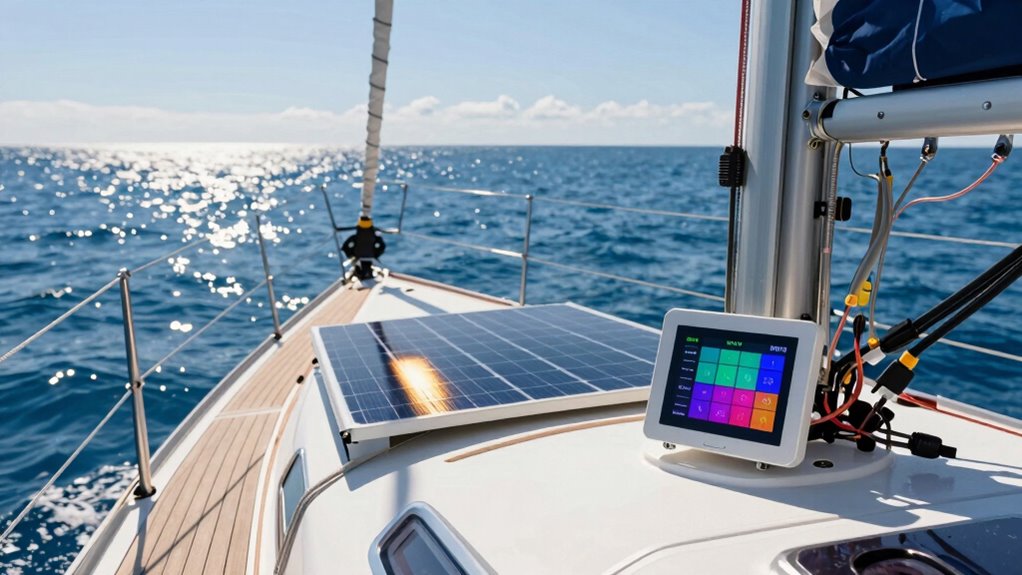
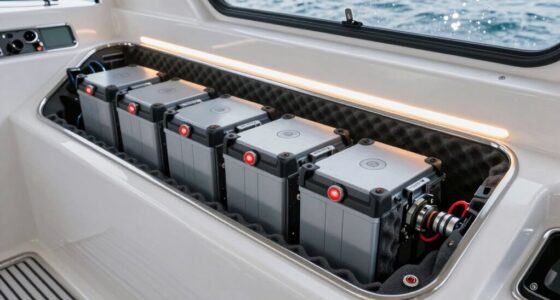
Understanding how much energy your boat needs each day is essential because it helps you design an effective and reliable solar power system. When you accurately estimate your daily energy consumption, you can select the right battery capacity, ensuring proper battery maintenance and longevity. Knowing your energy needs boosts power efficiency by preventing over- or under-sizing your system, which saves money and reduces waste. It also allows you to prioritize essential devices, avoiding unnecessary drain on your batteries. By tracking your energy use, you’ll ensure your solar setup meets your boat’s demands consistently. This process of energy monitoring helps you optimize your system’s performance and adapt to changing conditions. Regularly reviewing your power consumption data enables you to identify potential issues early and make informed adjustments. It also helps maintain ideal battery health and prevents unexpected power shortages, giving you peace of mind during your voyage. Accurate estimates are the foundation of a sustainable, efficient solar solution on your boat. Additionally, understanding the contrast ratio of your solar components can help you evaluate their performance under different lighting conditions, ensuring your system operates efficiently in various environments. Incorporating energy efficiency techniques can further improve your system’s overall performance and reduce energy waste. Recognizing battery capacity needs early on is crucial for planning your energy system effectively.
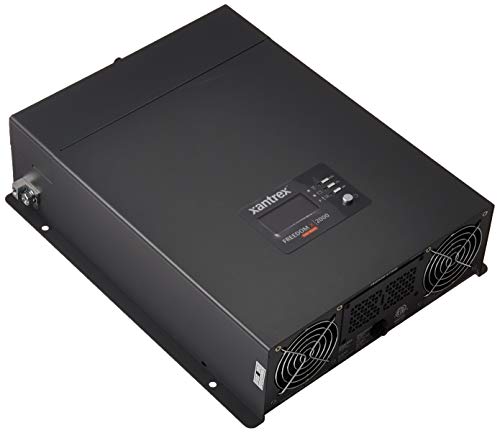
Xantrex 817-2000 Freedom X Inverter, 2000 Watts, 120VAC Output, 12VDC Input
Extended Surge Rating: Surges to 2X continuous power for 2 seconds for motor loads
As an affiliate, we earn on qualifying purchases.
How to Identify the Key Devices and Electronics on Your Boat
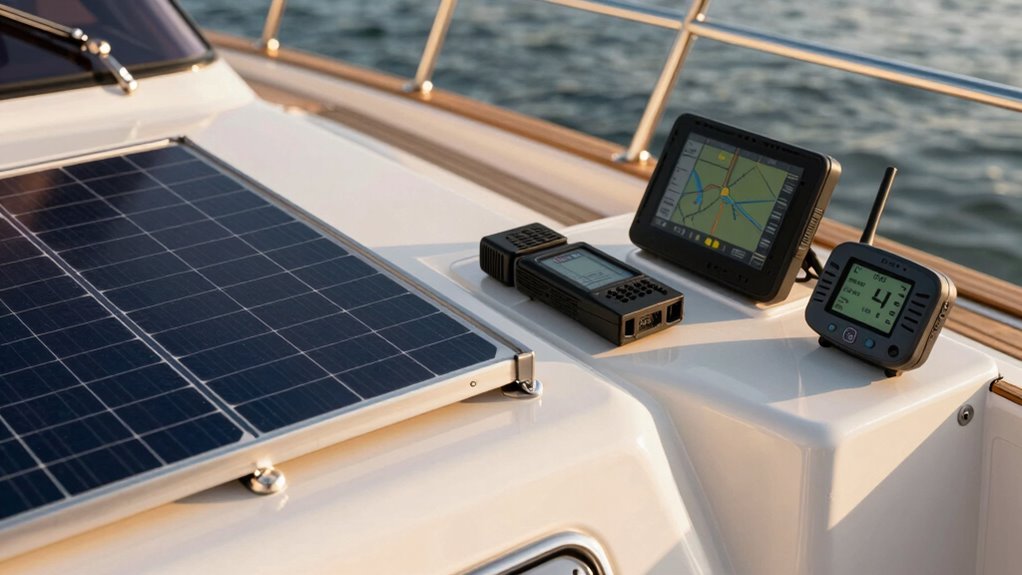
Have you ever wondered which devices on your boat consume the most energy? Identifying key electronics is essential for accurate energy planning. Focus on marine lighting, such as cabin lights and deck lights, as they often run for long periods. Navigation electronics, including GPS units, radar, and depth finders, also draw significant power, especially during extended trips. Make a list of every device you regularly use, noting their power ratings or wattage if available. Pay attention to appliances like refrigerators, communication equipment, and entertainment systems, which can add to your energy needs. By pinpointing these high-consumption devices, you’ll better understand your daily energy requirements and how to optimize your solar setup for reliable operation. Understanding power consumption patterns can help you make informed decisions about energy use and storage. Additionally, considering the energy efficiency of your devices can further improve your energy management and extend your solar system’s effectiveness. Recognizing peak energy usage times can also aid in scheduling device operation to minimize power draw during critical periods. Monitoring your energy consumption patterns over time enables more precise adjustments to your energy management strategies.

Inv/Chgr, Freedom XC PRO, 3000W, Marine
Extended Surge Rating: Surges to 2X continuous power for 5 seconds for motor loads
As an affiliate, we earn on qualifying purchases.
How to Calculate Watt-Hours for Each Device and Appliance
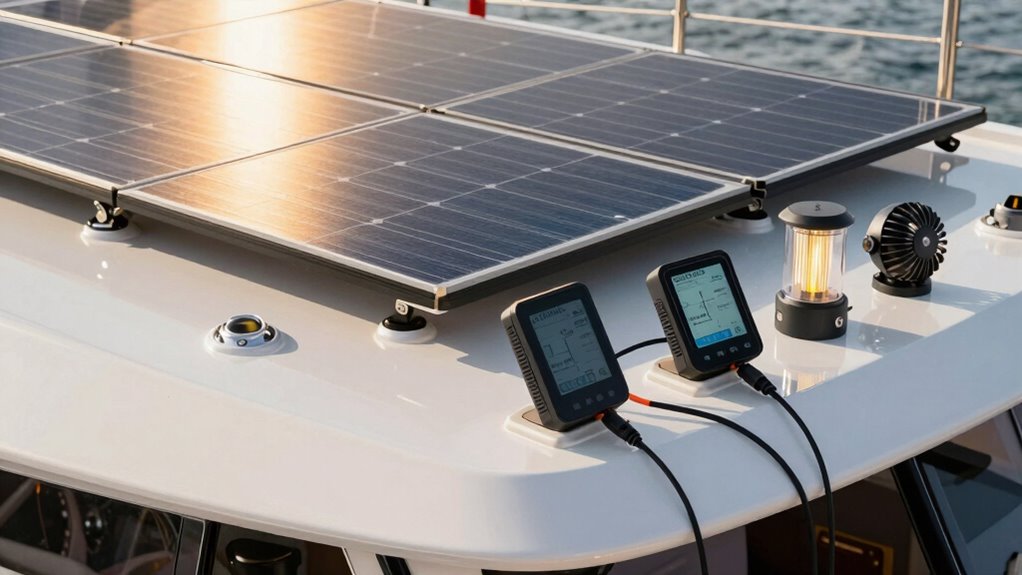
To accurately determine your energy needs, you need to calculate the watt-hours each device consumes over time. Start by noting the device’s wattage and estimate how many hours you’ll use it daily. Multiply these to find the watt-hours. Use this table for clarity:
| Device | Power (W) | Usage Time (hrs) | Watt-hours (Wh) |
|---|---|---|---|
| Refrigerator | 100 | 24 | 2,400 |
| Laptop | 50 | 4 | 200 |
| Lights | 10 | 6 | 60 |
| Water Pump | 150 | 0.5 | 75 |
Sum all watt-hours to determine total daily consumption. This helps you size your battery capacity and inverter properly, ensuring you meet your energy demands without overloads. Additionally, understanding energy consumption allows for more efficient system design and resource management. Knowing the power requirements of your devices is essential for optimizing your energy system and avoiding potential issues. Being aware of modern toilet water-saving features can also contribute to overall resource efficiency in your setup. Regularly monitoring your energy usage can help you make adjustments to improve overall efficiency and reduce consumption.

LiTime 2000W Pure Sine Wave Inverter 12V DC to 120V AC Converter with Remote Control, Surge 4000W, Built-in 4 AC Outlets, USB Port, Type-C Port for Home, RV, Camping, Off-Grid, Solar Power
New Upgraded Inverters for 2025: Experience the next level of power efficiency with the New-Upgrade LiTime 2000W Pure...
As an affiliate, we earn on qualifying purchases.
How Your Daily Habits Affect Your Energy Needs
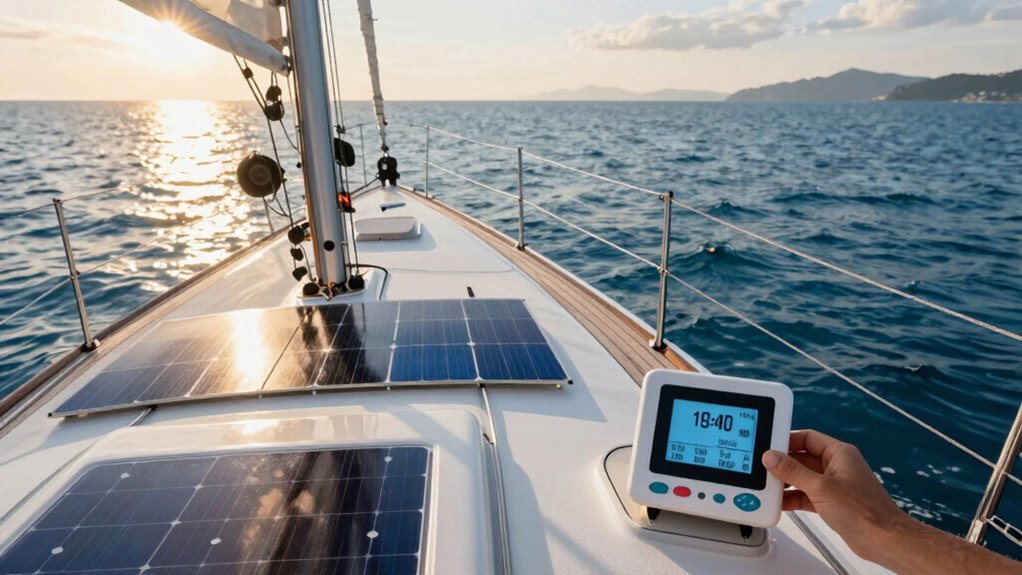
Your daily activity levels and how you use your appliances directly impact your energy needs. The more you move around and run devices, the more power your solar system must supply. Adjusting your habits can help you optimize your energy use and reduce your reliance on storage. Incorporating smart energy management techniques can further enhance your efficiency and ensure your system meets your daily demands. Monitoring power consumption patterns can help you identify areas where you might reduce usage and improve overall system performance. Being mindful of your routines can also help you design your space to naturally minimize energy waste. Additionally, understanding energy-efficient appliances can contribute significantly to lowering your daily energy requirements. Recognizing the importance of system upgrades can also lead to more substantial and long-term energy savings.
Daily Activity Levels
Since daily activity levels directly influence your energy consumption, understanding how your habits impact your energy needs is vital. If you spend long hours on boat navigation, you’ll use more power for instruments, lighting, and communication devices. Active days may also involve running marine insulation systems or powering water pumps, increasing your watt-hour requirements. On calmer days with minimal movement, your energy needs decrease, especially if you’re stationary or anchored. Recognizing these patterns helps you estimate your daily energy use more accurately. By tracking how often you engage in navigation or other high-energy activities, you can better plan your solar setup. Additionally, monitoring your energy consumption helps identify patterns and optimize your solar system to match your actual needs, ensuring reliable power without waste. Incorporating daily energy tracking can further refine your estimates, making it easier to adapt to changing activity levels. Being aware of your energy consumption habits enables you to make smarter decisions about power management and conservation. Understanding the impact of activity levels on your energy needs allows for more precise planning and efficient use of your solar resources. Incorporating behavioral adjustments can help reduce overall energy demand and extend your power supply during longer trips.
Appliance Usage Patterns
The types and frequency of appliances you use daily considerably impact your energy needs on a boat. Marine electronics like GPS, radios, and fish finders draw steady power, so managing their usage is essential. If you run appliances frequently or leave devices on for long periods, your daily watt-hour consumption increases markedly. Your power management strategy should include tracking which devices are used, how long, and at what power levels. For example, running a refrigerator constantly or using high-power appliances intermittently can alter your energy requirements. Being mindful of your appliance usage helps you estimate your solar needs more accurately. Incorporating connected home fitness technology into your energy management can also provide real-time data to optimize power usage onboard. Additionally, understanding energy-efficient appliance operation can further reduce your overall consumption and extend your solar capacity. Recognizing energy consumption patterns can help you identify opportunities to reduce unnecessary power drain and improve overall efficiency. Keeping a detailed log of your daily appliance use can reveal usage trends that inform better energy conservation strategies. Understanding net worth of individuals like Kate from Breaking Amish can also provide insights into managing personal finances related to renewable energy investments.
Using Manufacturer Specs to Find Your Device’s Power Consumption
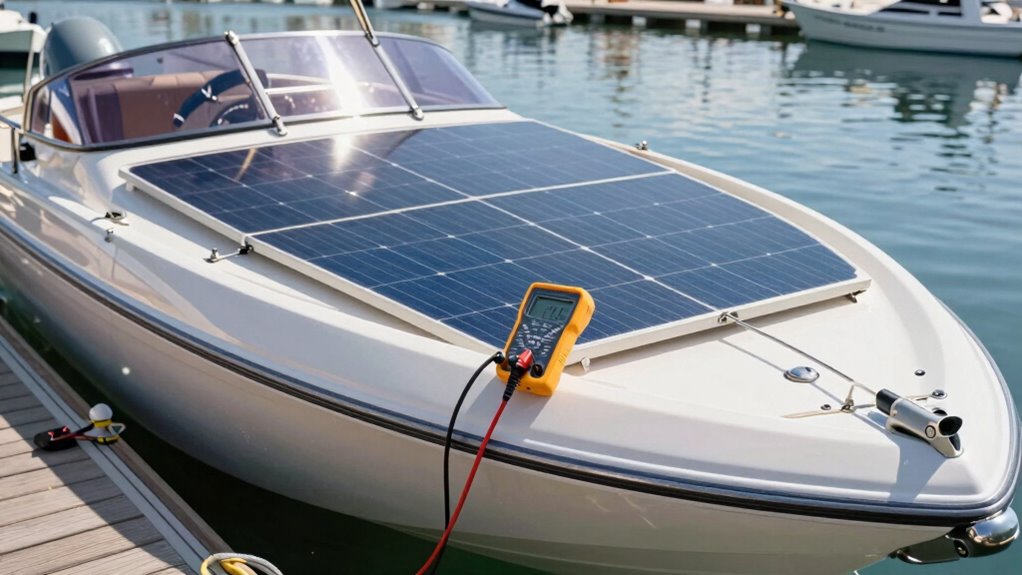
Manufacturer specifications are a reliable resource for estimating your device’s power consumption. Check the label or user manual for details on wattage or amperage, which directly indicate how much power your device uses. Once you have this information, you can better determine the size of your solar panel needed to generate sufficient energy daily. For example, if a device consumes 50 watts, and you plan to run it for four hours, it requires 200 watt-hours per day. To support this, your battery bank should store enough energy to cover daily use, factoring in efficiency losses. Accurate specs help you match your solar panel and battery bank capacity, ensuring your boat remains powered without overinvesting. Understanding device power ratings can help you make more precise calculations for your solar setup. This approach simplifies planning and optimizes your solar system.
How to Track Your Power Use Over Time
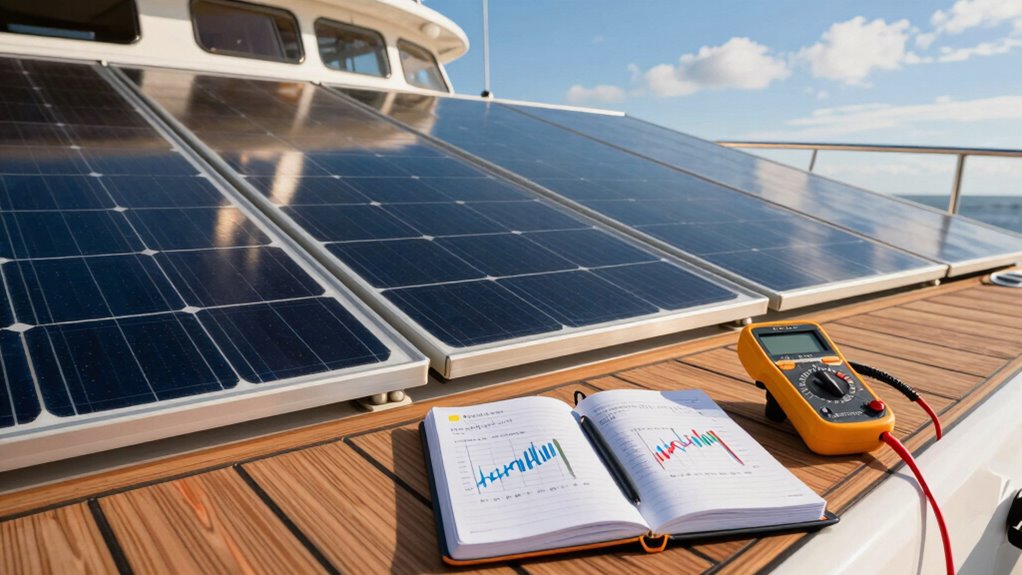
To manage your boat’s power effectively, you need to record your usage regularly. This helps you spot patterns and identify times when your system is under or overused. By analyzing these trends, you can make smarter decisions about your energy needs and solar setup.
Record Power Usage Regularly
Keeping a close eye on your boat’s power consumption is essential for managing your solar system effectively. Regularly recording your usage helps you identify patterns that impact battery maintenance and inverter sizing. Use a simple log or digital app to note daily watt-hours consumed by different appliances and systems. This habit guarantees you catch fluctuations early, preventing battery strain and prolonging lifespan. Accurate records allow you to adjust your solar setup if you notice increased demands or efficiency drops. Consistent tracking also helps refine your understanding of peak usage times, making future system upgrades more precise. Remember, the goal is to gather reliable data that guides your decisions on battery capacity and inverter size, ensuring your boat’s power needs are met without overloading or underutilizing your solar resources.
Analyze Consumption Patterns
Want to understand how your boat’s power needs change over time? Tracking your consumption patterns helps you identify usage trends and enhance your solar setup. Record daily watt-hours for each device and note battery maintenance routines to guarantee efficiency. Over weeks, you’ll see which appliances drain your batteries most and whether your inverter size is adequate. Use this table to analyze your data:
| Day | Device Watt-Hours | Notes (Battery Maintenance/Inverter) |
|---|---|---|
| Mon | 50 | Battery checked, inverter OK |
| Tue | 60 | Increased usage, consider inverter size |
| Wed | 45 | Battery fully charged, stable load |
| Thu | 70 | High power draw, monitor inverter |
| Fri | 55 | Regular maintenance performed |
Regular analysis helps you refine your system, guaranteeing sustained power and optimal battery health.
How to Add Up Watt-Hours for Your Total Daily Energy Needs
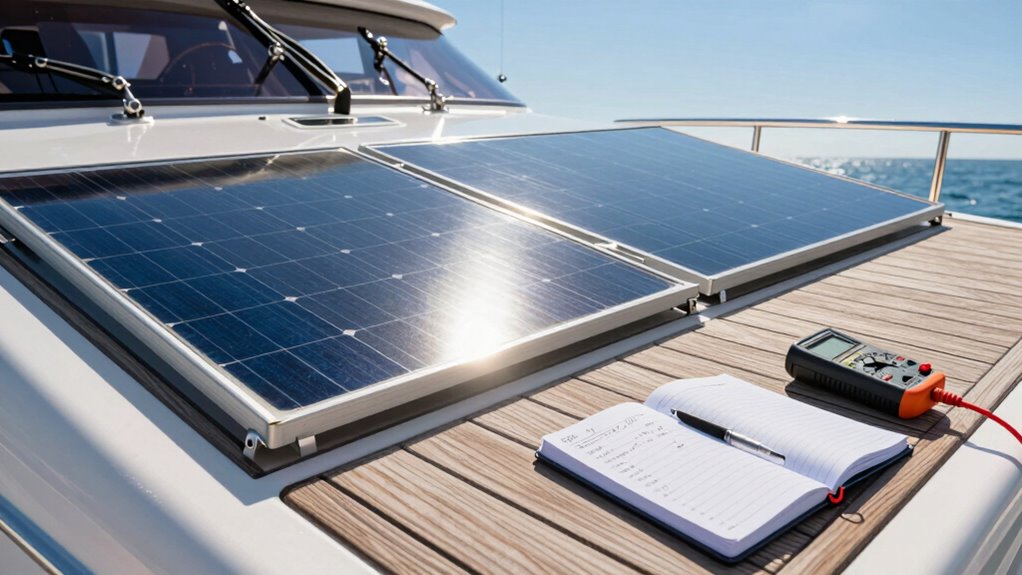
Understanding how to add up watt-hours is essential for calculating your boat’s daily energy needs. Start by listing all your devices and noting their power consumption in watts, along with their estimated daily usage hours. Multiply each device’s watts by its hours of use to get its daily watt-hour total. Add these totals together for your entire system. Remember, proper battery maintenance guarantees your batteries can handle the total watt-hours without depletion. When planning, consider inverter sizing to handle peak loads safely and efficiently. Knowing your total watt-hour requirement helps you choose the right solar panel setup and battery capacity. This method ensures you have enough energy for your daily needs without overloading your system or risking insufficient power.
How to Account for Battery and Solar System Losses in Your Estimates
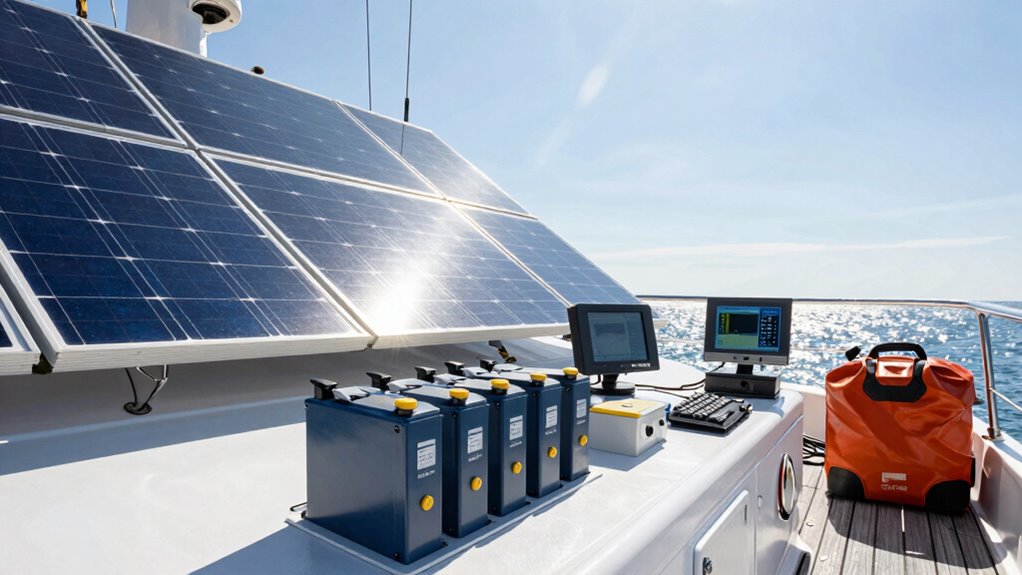
When estimating your boat’s solar and battery system needs, it’s crucial to account for inevitable energy losses that occur during conversion and storage. System losses reduce the usable watt-hours, so understanding and adjusting for them ensures accurate estimates. Battery efficiency typically hovers around 80-90%, meaning some energy is lost during charging and discharging. Solar system losses, caused by wiring, dust, and shading, usually amount to about 10-15%. To visualize this, consider the following:
| Energy Loss Type | Typical Loss Percentage |
|---|---|
| Battery efficiency | 10-20% |
| System losses | 10-15% |
| Total losses | 20-30% |
| Adjusted Watt-hours | Your initial estimate × (1 – total losses) |
Accounting for these losses helps you plan a system that reliably meets your energy needs.
How Seasonal and Weather Changes Impact Your Energy Use
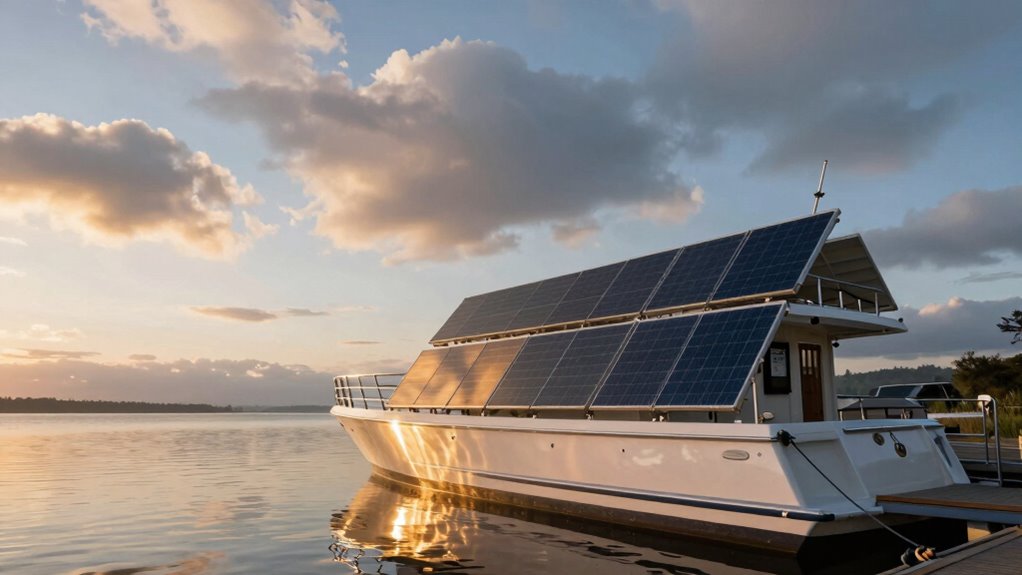
Your boat’s energy needs change with the seasons and weather. During winter or cloudy days, sunlight is less intense, reducing your solar power generation. Understanding these fluctuations helps you plan better and keep your system running smoothly year-round.
Sunlight Variability Throughout Seasons
As seasons change, the amount of sunlight reaching your boat fluctuates considerably, affecting how much solar energy you can generate. During winter, shorter days and lower sun angles mean less solar power, while summer offers longer days and more direct sunlight. These variations impact your energy planning, so it’s crucial to adjust your expectations and system setup accordingly. Seasonal changes can also accelerate corrosion, making proper boat hull maintenance and corrosion prevention essential to keep your system functioning efficiently. Regular hull inspections ensure that salt, algae, and other corrosive elements don’t compromise your boat’s exterior or your solar equipment. By understanding these seasonal fluctuations, you can better optimize your solar array, maintain your boat’s integrity, and ensure a reliable energy supply year-round.
Weather Effects on Power Generation
Weather conditions, including clouds, rain, and wind, directly influence how much solar energy your boat’s solar panels can produce. Cloud cover diminishes sunlight reaching the panels, decreasing energy output, especially during overcast days. Rain can temporarily lower efficiency and wash away dirt, but it also clears the sky afterward. Wind can help cool panels, slightly boosting performance, but strong gusts may cause shading or physical damage. Temperature fluctuations also impact power generation; higher temperatures can decrease panel efficiency, while cooler conditions often improve it. Being aware of these weather effects helps you better estimate your daily watt-hours. Planning for variable conditions ensures you’re prepared for days of reduced energy production and helps optimize your boat’s solar system over time.
How to Use Your Watt-Hour Estimate to Size Your Solar System
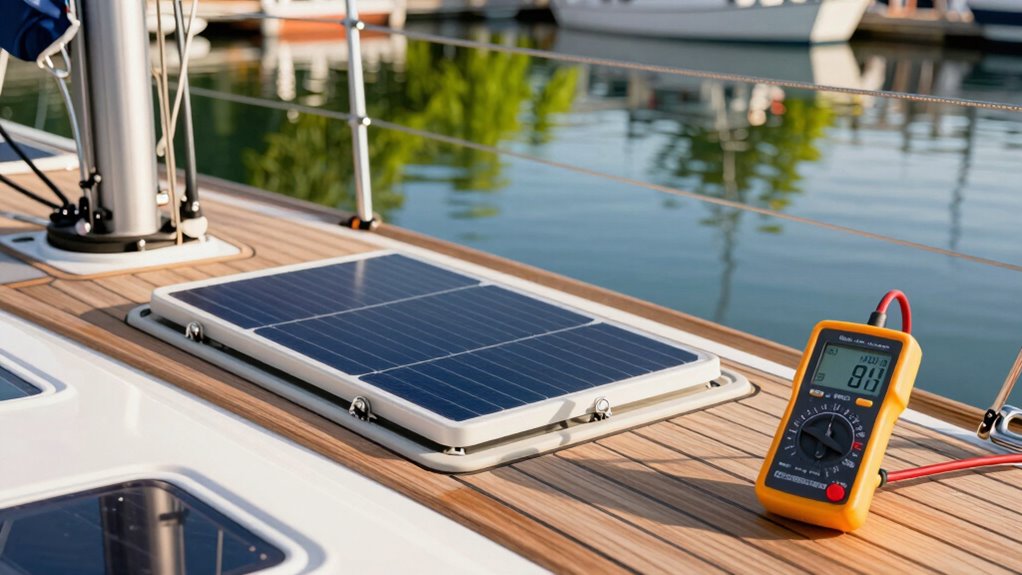
To size your solar system effectively, start by calculating your total energy needs in watt-hours. Once you know this, you can choose the right solar panel types, considering efficiency and space constraints. For example, monocrystalline panels are more efficient but may cost more, while polycrystalline options are budget-friendly. Remember that proper battery maintenance is essential to store excess energy safely and extend your system’s lifespan. Make sure your batteries can handle your daily watt-hour requirements and plan for occasional energy surges. Using your watt-hour estimate, select a solar panel array that can generate enough power on cloudy days and during different seasons. This approach ensures your system is balanced, reliable, and tailored to your boat’s specific energy consumption.
Frequently Asked Questions
How Often Should I Reassess My Daily Energy Needs on My Boat?
You should reevaluate your daily energy needs regularly, especially after battery maintenance or upgrading equipment. Changes in inverter efficiency or adding new devices can impact your consumption. Check your energy usage monthly or if you notice battery performance issues. Staying proactive ensures your solar system remains efficient, preventing unexpected power shortages, and helps you adjust your system to match your evolving needs on the boat.
Are There Specific Tools Recommended for Measuring Device Power Consumption Accurately?
You should use a reliable multimeter, guaranteeing it’s properly calibrated, to measure device power consumption accurately. For more precise data, consider energy monitoring systems designed for boats, which track real-time power usage. These tools help you identify high-consumption devices, optimize your solar setup, and extend your energy independence. Regular calibration of your multimeter ensures consistent accuracy, making your measurements trustworthy for managing your boat’s energy needs effectively.
How Do I Adjust My Watt-Hour Estimates for Different Boat Sizes?
Wondering how to fine-tune your watt-hour estimates for your boat size? You need to think about energy scaling. Larger boats typically demand more power, so multiply your baseline watt-hours by a factor reflecting your boat’s size—say, 1.5 for a bigger vessel. Smaller boats need less energy, so scale down accordingly. Adjusting these estimates helps you plan your solar setup accurately, ensuring you never run out of power on the water.
Can I Use a Portable Solar Panel to Supplement My Existing System?
Yes, you can use portable panels to supplement your existing solar system. They provide extra energy supplementation when needed, especially during cloudy days or high energy use periods. Just connect the portable panels to your system with the right adapters, ensuring your boat’s electrical setup can handle the additional watt-hours. This flexibility helps boost your overall energy production and keeps your systems running smoothly without overloading your main setup.
What Safety Precautions Should I Consider When Installing Solar Panels on a Boat?
When installing solar panels on your boat, prioritize electrical grounding to prevent shocks and guarantee system stability. Always use marine-rated wiring and connectors for fire safety, avoiding corrosion and overheating risks. Secure panels firmly to withstand movement and weather. Double-check all connections, and consider installing a circuit breaker for added protection. Regularly inspect your setup to catch any potential issues early, keeping your boat safe and your solar system reliable.
Conclusion
By estimating your daily watt-hours, you’re building a roadmap to keep your boat energized, like charting a course through clear waters. Knowing your energy needs helps you size your solar system accurately, preventing surprises along the way. Think of it as packing the right supplies for your journey—too little, and you’re stranded; too much, and you’re weighed down. With these calculations, you’re steering confidently toward sustainable, worry-free boating adventures.