
TL;DR

Get sports gear delivered free with Prime
- Fast, free delivery on millions of items
- Prime Video, Amazon Music and more included
- Member-only deals all year
Marine waterproof dry bags shield your equipment from water, sand, and dirt during boating, kayaking, or fishing. Knowing their features and limits helps you choose the right one and keep your gear dry and safe.
Imagine your favorite kayak ride—waves crashing, salt spray in the air, the sun warming your back. Your phone, camera, and snacks sit safely inside a durable, waterproof dry bag, untouched by the splashes and spray. That’s the power of a good marine dry bag: peace of mind in a salty, wet environment.
But not all dry bags are created equal. Some handle a quick rain shower, while others survive full submersion. In this guide, you’ll learn what features matter most, how to pick the right size, and practical tips to keep your gear completely dry, no matter how wild the water gets.
Always check the IP rating and seam construction—welded seams and IPX7+ ratings provide the best waterproof protection.
Choose a size that matches your gear needs; smaller bags improve organization and reduce overstuffing risks.
Proper packing, sealing, and securing prevent water ingress and gear loss, especially in rough water conditions.
Regular maintenance, including rinsing and seam inspections, extends your dry bag’s life and reliability.
Stay updated on new materials like TPU laminates and innovative features such as purge valves for smarter packing.
What Makes a Dry Bag Truly Waterproof?
Not every bag labeled “waterproof” actually stands up to immersion. The real test? How well it keeps water out during splashing, rain, or accidental dunking. High-quality marine dry bags use **welded seams** instead of stitched ones, which are glued together to prevent leaks.
Look for an **IPX rating**—a standard that measures water protection. IPX7 means the bag can handle brief immersion up to one meter deep for 30 minutes, but IPX8 is designed for continuous submersion under specific conditions. Remember, no bag is foolproof—damage, wear, or improper sealing can compromise waterproofing.
Understanding these standards helps you select a bag that matches your activity. For instance, if you’re kayaking in rough waters or planning to swim with your gear, choosing an IPX8-rated bag ensures it can handle full immersion without water seeping in. Conversely, if your activities involve light splashes, a bag with IPX4 or IPX7 might suffice, but always consider the potential for accidental submersion and the durability of the seals. The material composition also matters; flexible, durable fabrics like TPU or high-denier nylon resist tears and abrasions, which are common in rugged environments. The tradeoff? Heavier or stiffer materials might be less packable but offer superior protection. Recognizing these nuances helps you balance convenience with safety, ensuring your gear stays dry even in unpredictable conditions.
Why does this matter? Because choosing the wrong waterproof standard or material can mean the difference between dry gear and ruined equipment. For example, a bag with a lower IP rating might seem sufficient for casual use but could fail during an unexpected dunking, leaving your valuables exposed. Conversely, over-specifying—buying an IPX8 bag when only light splashes are expected—can lead to unnecessary weight and expense. Understanding these tradeoffs enables you to make informed decisions tailored to your specific activities, providing peace of mind and protecting your investment in gear.
As an affiliate, we earn on qualifying purchases.
How to Pick a Dry Bag That Fits Your Adventure
Choosing the right size and features depends on what you plan to carry. Do you need to protect your phone, wallet, and keys? A 2-5 liter bag will do. Planning an overnight trip with clothes, food, and electronics? Think 10-20 liters. For larger gear or group supplies, go bigger—up to 50 liters or more.
Color matters, too. Bright orange or yellow makes spotting your bag easy on a busy boat or beach. Reinforced lash points and corrosion-resistant hardware add durability, especially when securing gear to a moving vessel.
Matching your gear with the right size isn’t just about convenience; it’s about reducing risks. An overstuffed bag strains seams and zippers, increasing the chance of leaks or failures. Conversely, a bag too large for your gear can lead to disorganized contents, making it harder to find what you need quickly. Proper sizing ensures that your gear is snug and protected, minimizing movement that could wear down seams or seals over time. The choice of features—like reinforced handles, corrosion-resistant hardware, and bright colors—also impacts durability and visibility, which are critical in emergency situations or low-light conditions. Think of it as customizing your gear storage to match the demands of your adventure, balancing capacity, protection, and ease of access for optimal performance.
Why does this matter? Because selecting an appropriately sized dry bag prevents unnecessary strain on materials and hardware, reducing long-term wear and tear. A well-fitted bag also makes packing more efficient, saving space and ensuring quick access when needed. Overly large or small bags can cause frustration or accidental damage—overstuffing stresses seams, while under-sized bags force you to leave out essentials or pack inefficiently. Choosing the right features enhances durability and usability; for instance, reinforced handles make carrying easier, and bright colors improve visibility in emergencies. Ultimately, matching your dry bag to your activity ensures your gear remains protected, your handling is easier, and your overall experience is safer and more enjoyable.
IPX7 waterproof dry bag for kayaking
As an affiliate, we earn on qualifying purchases.
As an affiliate, we earn on qualifying purchases.
Key Features That Keep Your Gear Dry and Safe
Marine dry bags often include features tailored for tough water environments. Look for **corrosion-resistant buckles** and hardware—metal that withstands salt, humidity, and sun. Reinforced **D-rings** and lash points let you secure the bag firmly to your boat or kayak without risking damage.
Bright colors like neon green or orange boost visibility, while reflective details help locate your bag in low light. Padded, removable shoulder straps turn a dry bag into a backpack—handy when hiking or moving across rocky shores.
Some bags feature **external pockets** for quick access, but they shouldn’t compromise waterproof integrity. Clear windows help identify contents without opening the bag, and **air-release valves** simplify packing, letting you expel excess air for compact storage.
Imagine a fishing expedition where your waterproof camera bag has reinforced straps and a high-visibility color, making it easy to find amidst tangled lines and splashing waves. Those small features can make a big difference.
Understanding these features’ importance helps you select a dry bag that not only protects your gear but also withstands the rigors of frequent use. For example, corrosion-resistant hardware extends the lifespan of your bag in saltwater environments, preventing rust and breakdown. External lash points and D-rings provide secure attachment points, reducing the risk of losing your gear during rough rides or accidental drops. Bright colors and reflective strips aren’t just for aesthetics—they’re safety features that help you locate your gear quickly in low visibility conditions. Padded straps add comfort when carrying heavier loads over long distances, reducing fatigue and improving handling. Recognizing these features’ roles allows you to prioritize what matters most for your specific activities, ensuring your dry bag remains a reliable companion in all water adventures.
Why does this matter? Because selecting a dry bag with the right features directly impacts its durability, ease of use, and safety. Corrosion-resistant hardware prevents rusting, which can weaken attachment points over time. External lash points and D-rings offer versatile options for securing your gear, especially in turbulent conditions. Bright colors and reflective strips improve visibility, crucial for quick retrieval or locating your gear in low-light or crowded environments. Padded straps reduce fatigue during extended carrying, making your experience more comfortable. Understanding these features helps you invest in a dry bag that not only protects your gear but also enhances your overall safety and convenience during water adventures.
As an affiliate, we earn on qualifying purchases.
How to Properly Pack and Secure Your Dry Bag
Proper packing is the key to a dry bag’s performance. Start by protecting sharp objects—wrap them in cloth or place in protective cases. Fill the bag evenly, avoiding overstuffing, which can strain seams and seals. Remember, less is more—leave some space for the top to roll properly.
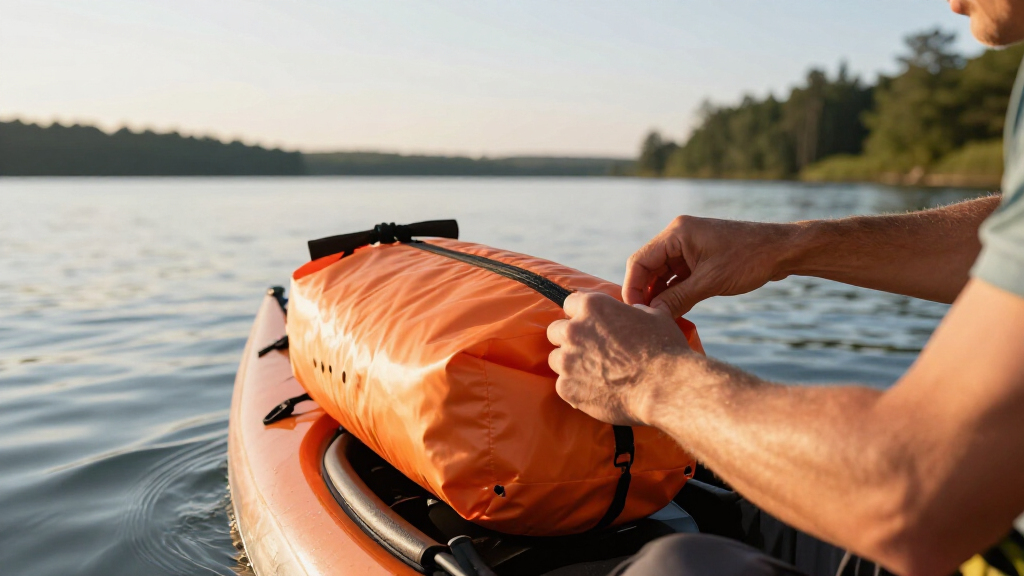
Expel excess air before sealing. This helps the bag float if it’s waterproof and keeps contents compact. When closing, fold the stiffened top at least three times, pressing out air, then clip or buckle securely. A loose roll invites water in.
Secure the bag to your vessel with lash points or straps—never rely solely on the roll-top closure. During rough waters, straps prevent the bag from washing overboard. Also, keep electronics in separate waterproof cases inside the dry bag for double protection. Consider placing your phone and GPS in small, sealable pouches before packing.
For example, on a sailing trip, I always double-check the seal and secure the bag to a cleat with a carabiner. It’s simple but can save your gear from a sudden wave or accidental slip.
Understanding the importance of proper packing and securing techniques ensures your gear remains dry and accessible when you need it most. Overstuffing can cause seams to burst or seals to fail under pressure, so packing efficiently and leaving some space for the roll is crucial. Expelling excess air not only makes the bag more compact but also improves buoyancy and reduces the risk of water ingress through the seal. Securing the dry bag with lash points or straps prevents it from being washed overboard during turbulent conditions, which is a common cause of gear loss. Using separate waterproof cases inside the dry bag adds an extra layer of protection for electronics, ensuring that even if the outer bag is compromised, your critical devices stay dry. Practicing these packing and securing techniques before your trip helps you avoid costly mistakes and keeps your gear safe in unpredictable water environments.
As an affiliate, we earn on qualifying purchases.
Maintaining and Testing Your Dry Bag for Longevity
To keep your dry bag performing at its best, rinse it with fresh water after saltwater adventures. Let it air dry completely—never store it while damp. Regular inspections are vital: check seams, buckles, and coatings for cracks, delamination, or wear.
Lubricate waterproof zippers and inspect welds for leaks. A quick test? Place a few paper towels inside, seal the bag, and dunk it in water or pour water over it. If the paper stays dry, you’re good to go. If not, it’s time for repairs or replacement.
Some owners tape small punctures with repair patches designed for PVC or TPU fabrics. Larger damages may require professional patching or replacing the bag altogether. Proper storage—away from prolonged sunlight, high heat, and chemicals—extends its lifespan.
Imagine you’re preparing for a multi-day kayak trip. Running this quick check before heading out ensures your gear remains dry, and your trip isn’t cut short by a leaky bag or damaged seam.
Understanding and implementing regular maintenance routines is essential for extending your dry bag’s lifespan. Saltwater and sun can degrade materials over time, leading to cracks or weakened seams. Rinsing with fresh water removes corrosive salt deposits, while proper drying prevents mold and material breakdown. Periodic inspections for cracks, delamination, or worn hardware allow for early repairs, saving you money and hassle later. Lubricating waterproof zippers keeps them functioning smoothly, preventing water ingress through faulty seals. The water test with paper towels is a simple, effective way to verify the integrity of your bag after cleaning or repairs. Small punctures can sometimes be temporarily patched with repair kits designed for PVC or TPU fabrics, but large damages may necessitate professional repair or replacement to ensure continued waterproofing. Proper storage—away from direct sunlight, chemicals, and high temperatures—helps preserve the integrity of the fabric and seals. Incorporating these maintenance habits into your routine guarantees your dry bag remains reliable for countless adventures.
The Latest in Marine Dry Bag Innovation
New materials and designs are pushing the boundaries of waterproof gear. TPU laminates now dominate the market thanks to their low weight and flexibility, making bags easier to carry and pack. Brands are moving away from PVC due to environmental concerns, offering eco-friendlier options.
Recycled fabrics are also emerging, though mixed-material construction can complicate recycling efforts. Waterproof zippers have improved, providing faster access and better submersion protection. Some bags now feature **integrated purge valves**, allowing you to remove trapped air without unrolling the top, making packing more efficient.
Specialized designs target specific activities: camera packs with shock absorption, fishing bags with external rod holders, and deck bags with multiple compartments. Repairability is also improving, with some brands offering replaceable straps or repair patches, extending product life.
For instance, a recent TPU dry bag with welded seams and a built-in purge valve weighs just 1.2 pounds, yet withstands full immersion—ideal for serious boaters and adventurers.
These innovations not only enhance durability but also improve user convenience and environmental sustainability. The use of lighter, more flexible, and eco-friendly materials reduces the burden of carrying gear and minimizes ecological impact. Features like integrated purge valves streamline packing, saving time and effort, while specialized designs cater to niche needs, making dry bags more versatile than ever. As technology advances, expect even smarter features—such as modular compartments, RFID-blocking pockets, and self-healing fabrics—that will continue to elevate the standard of waterproof gear for water enthusiasts.
What to Look for When Buying a Marine Dry Bag
Choosing the right dry bag means matching it to your activity. For quick splashes and light rain, a simple roll-top with IPX4 or IPX7 rating suffices. For full immersion or saltwater adventures, look for bags with **IPX8 ratings** and welded seams.
Compare features like closure type, seam construction, fabric durability, and hardware corrosion resistance. Consider capacity, shape, and how easy it is to access contents. Bright colors and reflective details boost visibility. Think about comfort—removable straps or padded handles matter if you carry the bag over long distances.
Lastly, check warranty, repair options, and whether replacement parts are available. A well-made bag with good support can last for years and save you money long-term.
For example, I picked a 30-liter TPU bag with welded seams, a bright red finish, and a built-in air valve. It’s versatile, durable, and trusted for multi-day trips on the water.
Understanding these considerations helps you avoid costly mistakes and ensures you select a dry bag that meets your needs without unnecessary features or compromises. It’s about finding a balance between protection, convenience, and longevity, so your investment pays off in years of reliable use.
Your Questions About Marine Dry Bags Answered
Are all dry bags fully waterproof? No. Many are designed for splash, rain, or brief immersion. Only bags with specific ratings (like IPX8) are truly submersible under demanding conditions.
Can I submerge a roll-top dry bag? Some can survive short dips if sealed properly, but performance varies. Always check the manufacturer’s rating before trusting it for immersion.
How many times should I roll the top? Usually at least three full rolls, pressing out air to ensure a tight seal. Follow the manufacturer’s instructions for best results.
What does IPX7 mean? It indicates protection during temporary immersion—up to one meter deep for 30 minutes—under controlled test conditions.
Will my dry bag float? It may, if sealed tight and filled with enough trapped air, but don’t rely on it for flotation or rescue. It’s mainly for protecting gear, not life-saving.
Understanding these points ensures you use your dry bag correctly and avoid misconceptions that could lead to gear loss or damage. Recognizing the limitations of each rating helps you select appropriate gear for your specific activities, avoiding overconfidence that might result in water ingress during critical moments.
Conclusion
A dry bag is your best friend when facing wet, salty, or sandy environments. It’s not just about keeping gear dry—it’s about trusting your equipment to perform under pressure. Invest in quality, pack wisely, and inspect regularly. That’s the secret to endless adventures with peace of mind.
Next time you’re on the water, imagine your gear protected, your mind at ease, and your focus on the horizon. That’s the power of a well-chosen marine dry bag—simple, reliable, and ready for anything.
NFL season / tailgating Picks
team gear
As an affiliate, we earn on qualifying purchases.