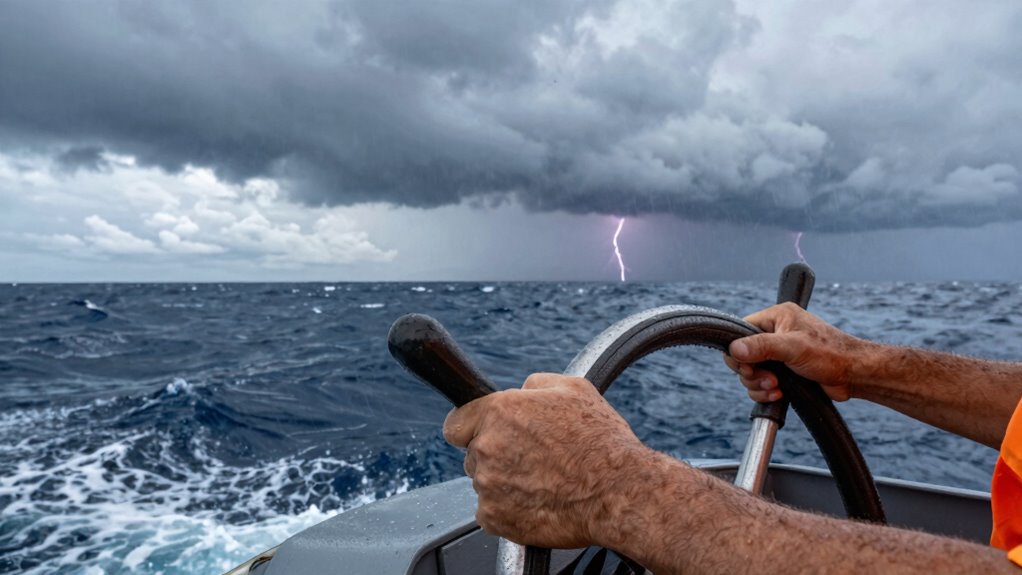
If you lose the helm unexpectedly, stay calm and immediately assess the situation. Use visual landmarks like buoys and shoreline features to keep your course, and switch to backup steering options such as the emergency tiller or makeshift helm. Secure any temporary controls firmly and communicate clearly with your crew and nearby vessels. Regularly practice emergency drills so you’re prepared for such situations. Keep exploring for detailed steps to handle helm failures effectively.

Get sports gear delivered free with Prime
- Fast, free delivery on millions of items
- Prime Video, Amazon Music and more included
- Member-only deals all year
Key Takeaways
- Immediately stop the vessel if safe and assess the cause of helm failure.
- Use backup steering systems or emergency tillers to regain control.
- Secure makeshift steering devices firmly to the vessel’s structure and connect to the rudder if possible.
- Communicate with nearby vessels and relay distress signals to alert authorities.
- Conduct thorough repairs, test all steering components, and ensure vessel stability before resuming navigation.
As an affiliate, we earn on qualifying purchases.
Recognize the Signs of Helm Failure and Emergency Situations
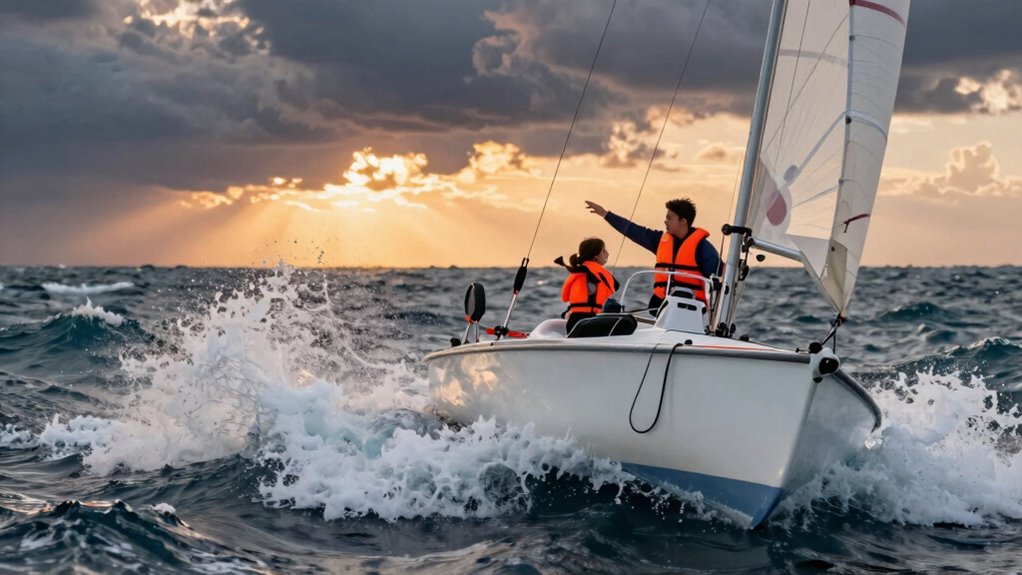
Recognizing the signs of helm failure early can make the difference between a manageable situation and a dangerous emergency. Regular helm maintenance and equipment inspection are vital to spotting issues before they escalate. If you notice difficulty turning the wheel, unusual noises, or sluggish response, it could indicate a problem with the helm system. Leaking fluid or loose connections are also warning signs during inspections. Pay attention to any loss of steering feel or inconsistent responses, which suggest a failure might be imminent. Address these signs immediately by checking your equipment and performing necessary repairs. Staying alert to these indicators helps you act quickly, preventing a sudden loss of steering control and ensuring safety on the water. Additionally, understanding the role of hydraulic systems in steering mechanisms can help identify potential failures before they occur. Regularly inspecting hydraulic fluid levels can prevent system malfunctions and ensure smooth operation. Being familiar with emergency procedures for helm failure can also improve your response time in critical moments. Proper system maintenance routines, including checking for fluid leaks, is essential for reliable steering performance and safety.
As an affiliate, we earn on qualifying purchases.
How to Use Visual Landmarks to Keep Your Course When the Helm Fails
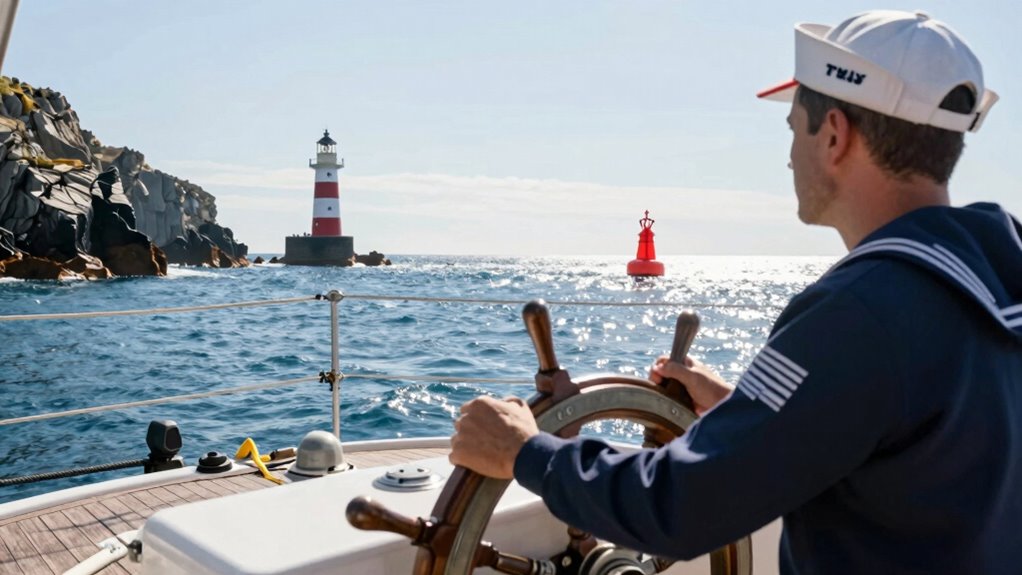
When your helm fails, using visual landmarks helps you stay on course. Focus on identifying prominent features like buoys, shoreline marks, or structures, and keep them as your reference points. Remember to adjust your navigation for environmental changes such as waves or shifting light to maintain accuracy. Incorporating navigational awareness enhances your ability to interpret and respond to visual cues effectively. Developing visual navigation skills can further improve your ability to adapt when electronic systems are unavailable. Additionally, understanding the principles of floating on water can provide insight into how environmental factors influence your visual cues and overall navigation. Recognizing the importance of environmental conditions can help you better interpret and respond to changing surroundings. A solid understanding of water dynamics can aid in anticipating how currents and surface conditions impact visibility and landmark positioning.
Identify Prominent Landmarks
Have you ever wondered how sailors navigate when their steering fails? Identifying prominent landmarks is vital. Look for natural features like coastlines, islands, or distinctive shoreline shapes that remain visible from your position. These landmarks act as reference points to maintain your course. Before setting out, consult navigation charts to familiarize yourself with key features along your route. Accurate compass calibration is essential to cross-check your visual observations. Keep track of how landmarks shift relative to your boat to detect any drift. Consistently referencing these features helps you stay on course, even without a functioning helm. Remember, clear, recognizable landmarks are your best allies in emergency navigation, providing steady visual cues amid uncertain conditions. Additionally, understanding how to use visual cues effectively can greatly improve your ability to navigate safely in unexpected situations. Incorporating your knowledge of energetic alignment can also help you remain calm and focused, enhancing your decision-making under stress.
Maintain Consistent Reference Points
Keeping your course steady after steering failure depends on your ability to maintain consistent reference points with visual landmarks. Effective visual navigation relies on landmark identification, so select prominent features that are easily recognizable from your position. Focus on fixed objects like buoys, shoreline features, or distinctive structures. Track these landmarks carefully, noting their position relative to your vessel. To stay on course, compare their movement against your intended path regularly. Use the following table to help organize your observations:
| Landmark | Position Relative to Course | Changes Over Time | Adjustments Needed | Confidence Level |
|---|---|---|---|---|
| Example 1 | Port side, ahead | Stable | None | High |
| Example 2 | Starboard side, astern | Slight drift | Minor correction | Moderate |
Consistent landmark identification ensures you maintain a reliable visual navigation system when the helm fails.
Adjust for Environmental Changes
Environmental conditions like wind, current, and waves can cause your landmarks to shift or appear different from your previous observations. To maintain your course, you need to adjust for environmental changes by relying on visual cues and navigational charts. Here’s how:
- Reassess your landmarks frequently, noting how they shift with changing conditions.
- Cross-reference your visual landmarks with your navigational charts to confirm your position.
- Identify consistent features that remain stable despite environmental influences.
- Adjust your course by comparing real-time observations with your original reference points, ensuring you stay on track despite shifting landmarks.
As an affiliate, we earn on qualifying purchases.
What Are Your Emergency Steering Options and How Do They Work?
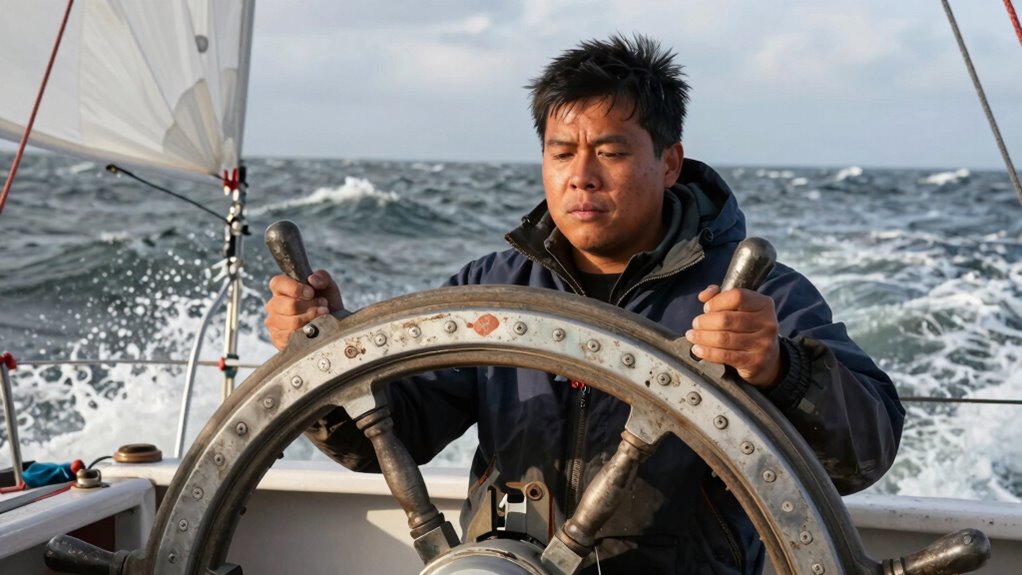
When faced with a sudden loss of steering control, knowing your emergency options can make all the difference. Your first line of action is manual control, which involves physically taking over the steering mechanism. This is vital if the problem stems from mechanical failure, such as a broken steering cable or jammed rudder. You might need to use an emergency tiller or a backup steering system if available. These manual options bypass the faulty components and give you direct control over your vessel’s direction. Keep in mind, these solutions require quick action and familiarity, so practicing emergency procedures beforehand helps guarantee you’re ready when needed. Staying calm and decisive allows you to implement these options effectively, maintaining control until you can restore normal steering or reach safety. Steering mechanisms must be understood and tested in advance to ensure you can operate them effectively in an emergency. Additionally, understanding emergency procedures for your specific vessel can improve response times and effectiveness during critical moments. Familiarity with vessel maintenance can also help prevent some steering failures by identifying potential issues before they lead to emergencies. Regular inspections and maintenance of steering components are essential for reliable operation during emergencies. Being aware of redundant systems and how to activate them can also provide an extra layer of safety in critical situations.
emergency boat navigation lights
As an affiliate, we earn on qualifying purchases.
As an affiliate, we earn on qualifying purchases.
When and How to Engage Backup Steering Methods (Tiller, Rudder, Emergency Tiller)
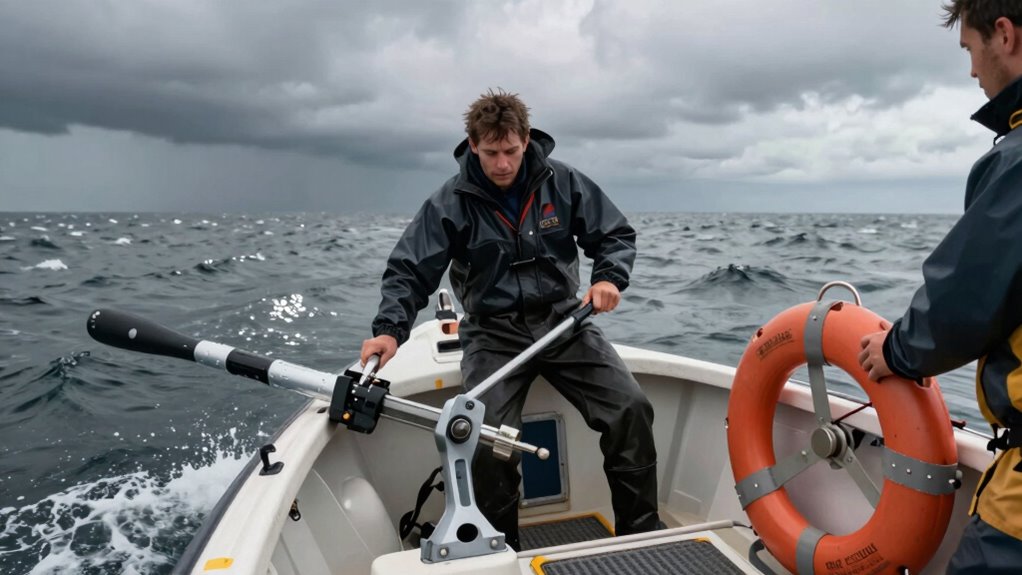
Engaging backup steering methods is crucial as soon as you recognize a loss of control or a mechanical failure that prevents normal steering. Prompt action ensures you maintain control and avoid dangerous situations. Here’s when and how to switch to backup steering:
Engage backup steering immediately to maintain control during helm failure or mechanical issues.
- Detect helm failure immediately; don’t delay, as quick response minimizes risk.
- Quickly assess your options—tiller, rudder, or emergency tiller—based on your vessel’s setup.
- Secure the primary steering system, then connect or position the backup device firmly.
- Test the backup steering briefly to confirm responsiveness before making course adjustments.
- Be aware that in some environments, seasonal variations can impact your ability to respond effectively, so preparation is key.
- Familiarity with your vessel’s backup steering procedures can significantly reduce response time during an emergency.
Using backup steering early prevents further damage or loss of control. Knowing when to switch ensures you stay in command, even during helm failure.
How to Secure and Use a Makeshift Helm in a Crisis
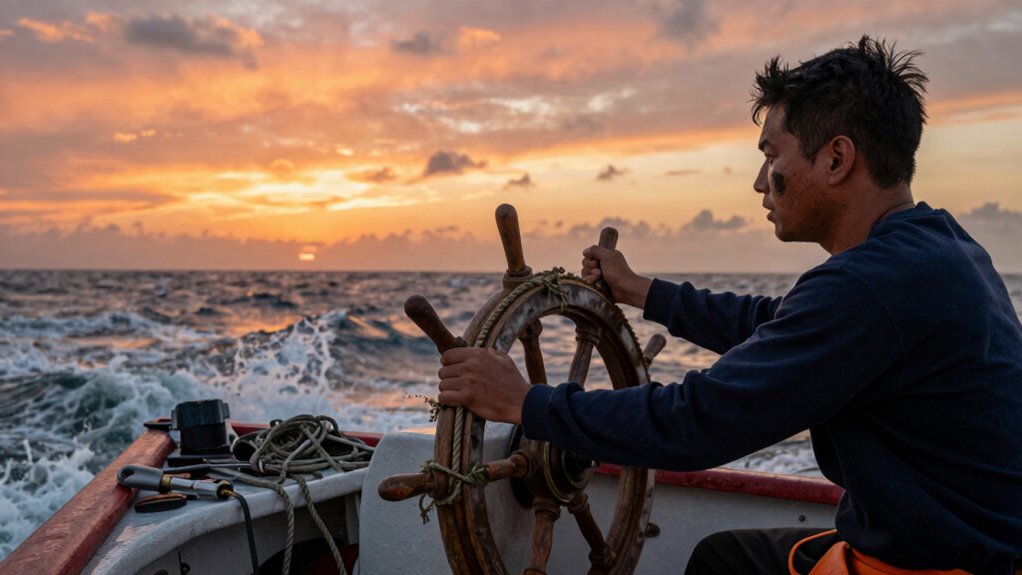
In a crisis where your primary steering fails, quickly improvising a makeshift helm can be a lifesaver. To do this effectively, understand the helm mechanics of your vessel and identify sturdy objects like a boat hook, paddle, or a piece of wood. Secure these items firmly using rope, bungee cords, or straps, ensuring they won’t shift during movement. Maintain a clear workspace and double-check equipment maintenance beforehand to ensure reliability. Attach the makeshift helm to a strong part of the boat’s structure, such as the cockpit or deck, and connect it to the rudder or steering mechanism if possible. Properly securing your improvised helm allows you to control your vessel until normal steering can be restored, increasing safety in a critical situation. Additionally, assessing support and boundaries can help prevent accidents and ensure effective handling during the emergency. Being aware of vessel stability can also prevent further mishaps while managing the crisis. Familiarity with modern technology and design features of your vessel can provide insights into alternative controls or backup systems that might be available. Remember to regularly practice emergency procedures so you’re prepared when every second counts.
Communicating With Crew and Nearby Vessels During Helm Failure
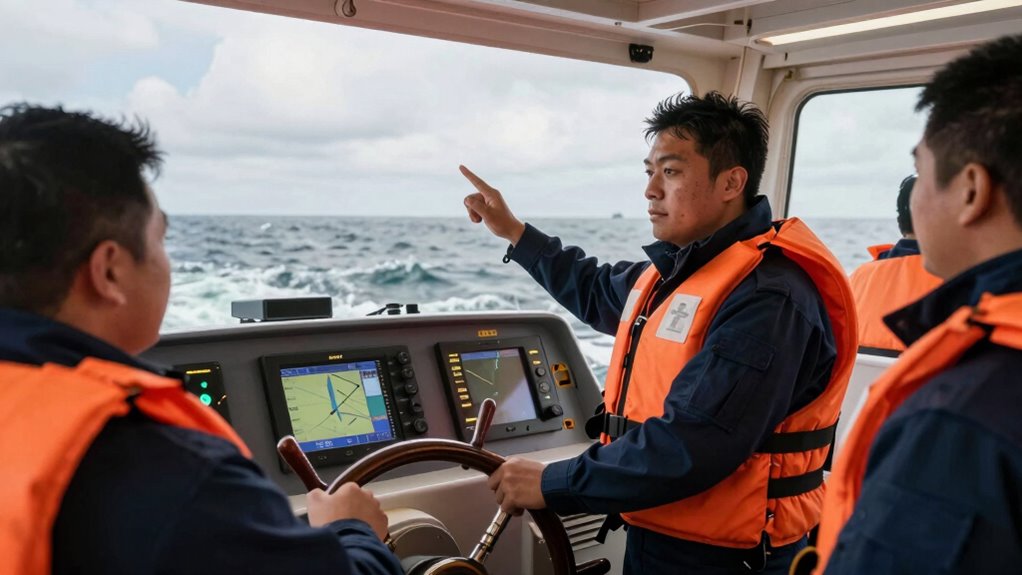
Effective communication is vital when your helm fails, so you need to use clear signals and alert protocols to get your crew’s attention. Make certain everyone understands your signals and knows how to respond quickly. Additionally, coordinate with nearby vessels to prevent misunderstandings and guarantee safe navigation.
Signal and Alert Protocols
When helm failure occurs, clear and immediate communication becomes essential to guarantee safety. You must quickly alert your crew and nearby vessels to prevent collisions or further emergencies.
- Use visual signaling, such as flashing lights or international distress signals, to attract attention.
- Deploy distress signals like flares or sound devices to communicate your situation clearly.
- Maintain a steady lookout and gesture to crew members to ensure everyone understands the situation.
- Broadcast distress calls on marine radio channels, providing your vessel’s identity and location.
Clear Communication Signals
How can you guarantee your crew and nearby vessels understand your situation during helm failure? The key is using clear communication signals, especially visual signals and distress codes. Establish predetermined signals your crew recognizes, such as specific flag or light signals, to indicate your vessel is in distress or experiencing steering issues. When communicating with nearby vessels, use internationally recognized distress codes like “Mayday” or “Pan-Pan” along with visual signals like flares or signal flags to alert them. Consistency is essential; ensure everyone knows what each signal means beforehand. Quick, unmistakable signals prevent confusion and help coordinate assistance. Remember, effective communication during emergency steering relies on clarity, promptness, and standardized signals that everyone on board and around your vessel understands immediately.
Coordinating With Nearby Vessels
During helm failure, clear coordination with nearby vessels is essential to guarantee safety and prompt assistance. Effective maritime communication ensures everyone understands your situation and can respond appropriately. To optimize vessel coordination:
- Use radio channels to inform nearby vessels of your emergency and position.
- Send distress signals following standard maritime protocols to alert rescue services.
- Maintain continuous communication with crew members to organize response efforts.
- Listen for instructions from nearby vessels or maritime authorities, and relay critical information promptly.
Practice Emergency Steering Drills to Prepare for Helm Failures
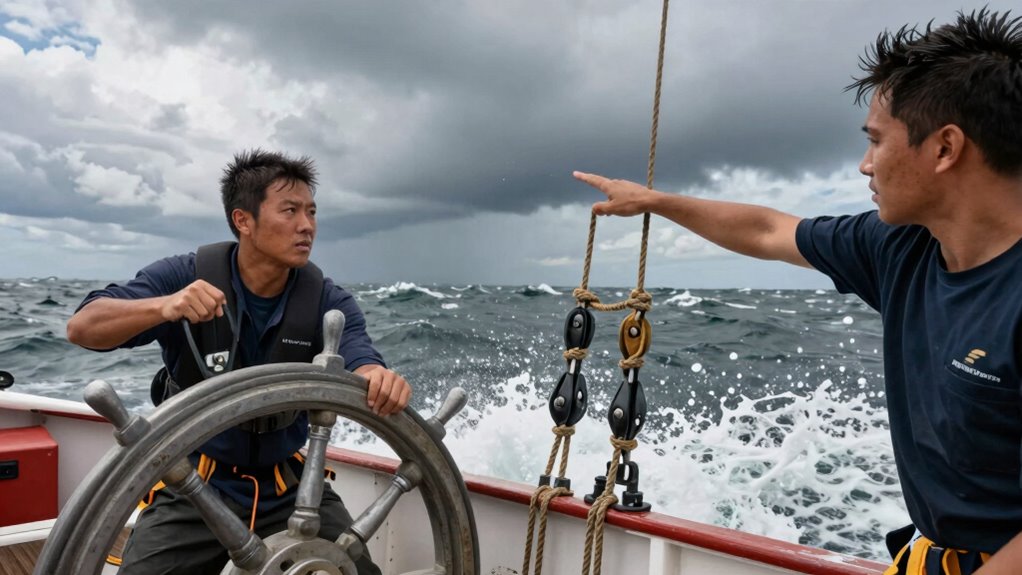
Practicing emergency steering drills is essential for preparing to handle helm failures effectively. Regular drills ensure your crew stays sharp and confident during a crisis. Focus on proper helm maintenance so all equipment functions smoothly when needed. Incorporate simulated failures to test responses and identify any weaknesses in your procedures. Training your crew to quickly switch to backup systems or manual steering can make all the difference in an emergency. Repetition builds muscle memory, reducing hesitation and errors during actual helm failures. Make drills routine, covering different scenarios, to keep everyone prepared. This proactive approach minimizes confusion and delays, ensuring you can maintain control of your vessel under pressure. Proper preparation through drills ultimately enhances safety for everyone onboard.
When and How to Seek Assistance From Coast Guard or Maritime Authorities
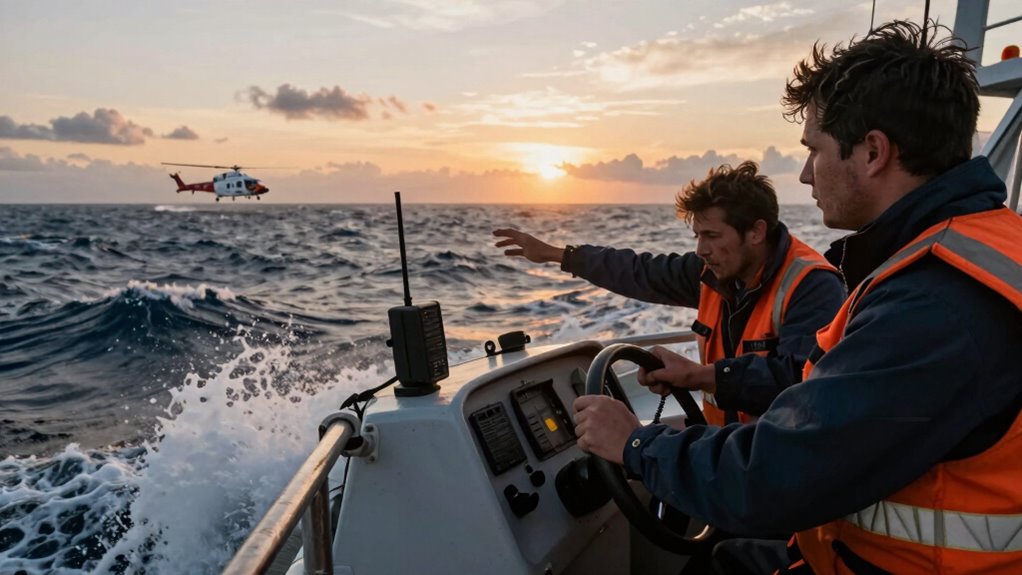
Knowing when and how to seek assistance from the Coast Guard or maritime authorities is crucial in an emergency to guarantee timely rescue and support. If your vessel’s stability is compromised or you lose control, act swiftly:
Seek help immediately if your vessel is unstable or out of control to ensure rescue and safety.
- Use marine navigation tools to assess your position and communicate your location via radio or distress signals.
- Call the Coast Guard immediately, providing details about your vessel, situation, and any hazards.
- Follow their instructions carefully, especially if they guide you to stabilize your vessel or prepare for rescue.
- Keep calm, monitor your vessel’s stability, and maintain constant communication until help arrives.
Prompt assistance ensures your safety, helps prevent further damage, and minimizes risks to others. Knowing when and how to seek aid can make all the difference in a critical situation.
Post-Incident Inspection, Repairs, and Preventing Future Helm Failures
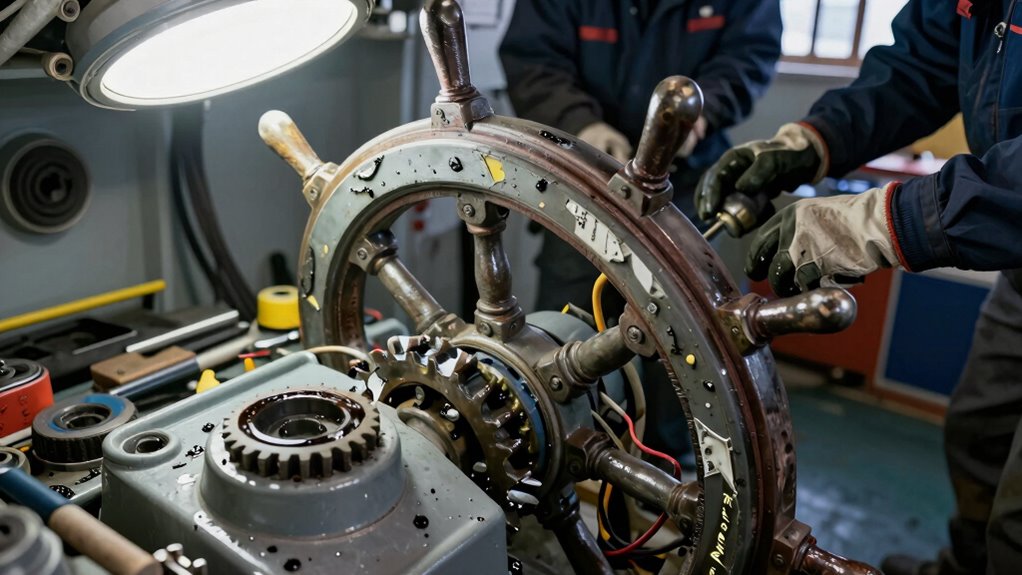
After verifying everyone’s safety and coordinating with rescue authorities, it’s important to thoroughly inspect your vessel for damage and causes of the incident. Check the steering system, fittings, and hydraulic lines for leaks, corrosion, or broken components that may have caused the failure. Assess your vessel’s stability—any imbalance or shifting weight could have contributed to the problem. Review your marine navigation logs and equipment to identify if external factors played a role. Once repairs are made, perform an extensive test of the steering system before resuming full operation. To prevent future helm failures, regularly inspect and maintain all steering components, and keep emergency repair tools onboard. Staying vigilant ensures your vessel remains stable and ready to handle unexpected steering issues.
Frequently Asked Questions
How Can I Identify Early Signs of Helm Failure?
You can spot early signs of helm failure by staying alert to helmsman alertness and regularly performing steering system checks. Notice if the helm feels unusually stiff or loose, or if there’s excessive play in the wheel. Pay attention to unusual noises or vibrations, and verify the steering responds smoothly. Regularly inspecting these signs helps you catch issues early, preventing potential emergencies and ensuring safe navigation at all times.
What Are Simple Makeshift Steering Tools I Can Prepare in Advance?
Think of yourself as MacGyver, ready for anything. You can prepare simple makeshift steering tools like a sturdy pole, a piece of wood, or a sailboat tiller extension for rudder improvisation. Use ropes or lines to create a temporary tiller. These steering improvisation tools help you maintain control if the helm fails, giving you a fighting chance to steer your vessel safely until proper repairs are possible.
How Do I Communicate Effectively During a Steering Emergency?
During a steering emergency, you should use clear communication protocols like shouted commands or agreed-upon emergency signals to coordinate with crew. Keep your messages concise and direct, such as “Hard to port!” or “Stop engines!” to avoid confusion. Confirm understanding by observing crew responses. Regularly practice these signals beforehand, so everyone knows what to do instantly, helping you manage the situation swiftly and safely.
When Should I Decide to Abandon Ship Due to Steering Failure?
You should decide to abandon ship if emergency decision making and crew coordination indicate no control over steering, and conditions worsen rapidly. If your crew can’t restore steering despite troubleshooting efforts, and the vessel’s safety is compromised, it’s time to abandon. Trust your team’s judgment, stay calm, and prioritize safety. Recognizing when to abandon is vital; delays can lead to disaster. Always follow established emergency protocols for timely, coordinated action.
How Can Regular Drills Improve My Emergency Steering Response?
Regular drills substantially improve your emergency steering response by reinforcing navigation safety procedures and ensuring crew training is effective. When you practice often, you become more confident and quick to react during actual helm failures. These drills help identify weaknesses in your procedures, streamline communication, and build teamwork. As a result, your crew is better prepared to handle steering emergencies efficiently, minimizing risks and maintaining safety at sea.
Conclusion
In a helm failure, quick thinking can mean the difference between safety and disaster. Imagine losing steering control during a storm—by using landmarks and backup methods, you can navigate safely to shore. Regular drills and clear communication help you stay prepared. Remember, staying calm and acting decisively guarantees you handle emergencies effectively, just like a crew who successfully guided their vessel after a steering failure, turning a crisis into a safe return.
NFL season / tailgating Picks
team gear
As an affiliate, we earn on qualifying purchases.